

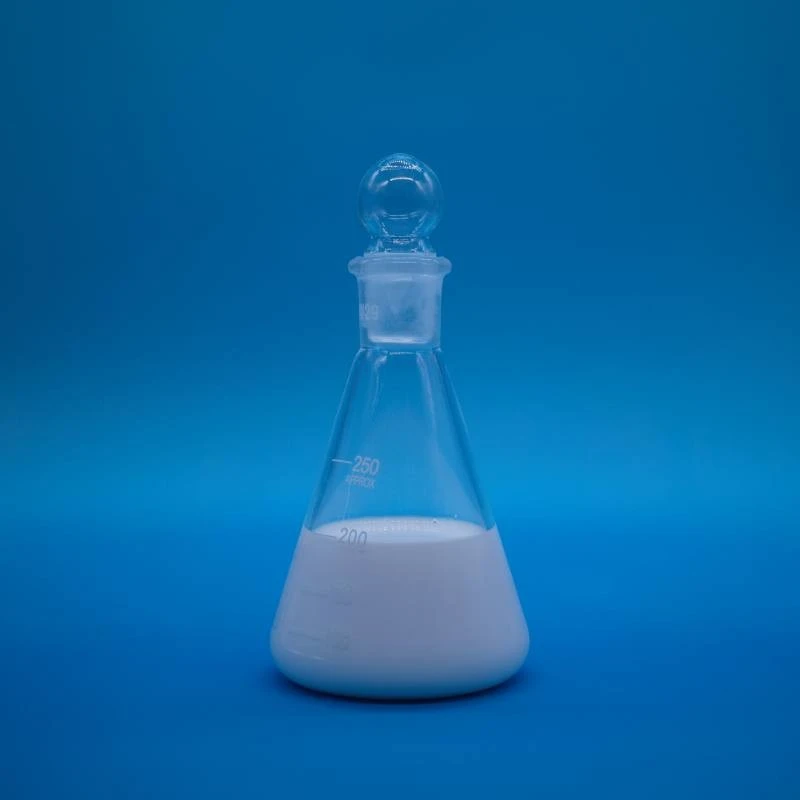
Shandong Peak-tech New Material Co., Ltd. is one of the most reliable manufacturers and suppliers of acidic silica sol in China. With a professional production team, we are able to meet the needs of the majority of our customers. Welcome to buy durable acidic silica sol for sale here from our factory.
Acidic Silica Sol Grade Comparison
Peak-tech acidic silica sols are aqueous nanosilica dispersions supplied at pH 2–4. Available grades provide different particle sizes, SiO₂ concentrations and sodium limits for acidic industrial formulations.
| Model | Particle Size | SiO₂ Content | Na₂O Content | pH | Shelf Life |
|---|---|---|---|---|---|
| HA2005 | 7–10 nm | 20±1% | ≤0.2% | 2–4 | ≥12 months |
| HA3010 | 10–15 nm | 30±1% | ≤0.2% | 2–4 | ≥12 months |
| HA3510 | 10–15 nm | 35±1% | ≤0.2% | 2–4 | ≥12 months |
| HA3020 | 20–30 nm | 30±1% | ≤0.2% | 2–4 | ≥12 months |
| HP2510A | 10–20 nm | 21–25% | ≤0.01% | 2–4 | ≥12 months |
| HP4010A | 10–20 nm | 38–40% | ≤0.01% | 2–4 | ≥12 months |
HP2510A and HP4010A are the published low-sodium acidic options. Confirm the current specification, analytical method and batch acceptance limits before sampling.
Choose by Surface Area, Solids and Sodium Limit
Fine-Particle HA2005
Combines the smallest published acidic particle range with 20±1% SiO₂ for lower-solids formulation trials.
HA3010 and HA3510
Share a 10–15 nm particle range while offering two supplied-solids options for process and handling requirements.
Larger-Particle HA3020
Provides 30±1% SiO₂ with a larger particle band for processes requiring a different surface-area and packing profile.
HP2510A and HP4010A
Offer lower published sodium with either 21–25% or 38–40% SiO₂ for tighter impurity specifications.
Confirm Compatibility in the Actual Acidic System
A pH match does not by itself prove stability. Electrolytes, multivalent ions, solvents, binders and mixing conditions can change colloidal behavior.
- Required grade parameters: specify particle size, SiO₂ content, pH and sodium limit.
- Acid environment: identify acid type, concentration and operating pH.
- Formulation components: list salts, binders, catalysts, pigments, solvents and process water.
- Processing conditions: provide addition order, mixing shear, temperature, residence time and dilution procedure.
- Stability criteria: define acceptable viscosity change, gelation, settling, precipitation and storage period.
- Quality documents: state analytical methods, COA items and batch acceptance tolerances.
- Order details: include sample quantity, annual demand, packaging and destination country.
Request an Acidic Silica Sol Sample and Quote
Send the particle size, SiO₂ content, sodium limit, acid system, other formulation components, stability test, trial quantity and annual demand.
Request an Acidic Grade RecommendationProtect Acidic Sol Stability During Storage
Packaging Options
Available polyethylene packaging sizes are 25 kg, 250 kg and 1000 kg.
Storage Temperature
Store at 0–40°C and protect from freezing. Freezing can cause irreversible gelation.
Direct Sunlight
Avoid prolonged exposure to direct sunlight during storage and transportation.
Container Closure
Keep containers closed to limit evaporation, contamination and precipitation of silica particles.
Acidic Silica Sol Purchasing Questions
What pH range applies to the listed acidic silica sols?
HA2005, HA3010, HA3510, HA3020, HP2510A and HP4010A are all listed at pH 2–4.
Which grades have the lowest published sodium limit?
HP2510A and HP4010A have published Na₂O limits of ≤0.01%. The four HA grades are listed at ≤0.2%.
What is the difference between HA3010 and HA3510?
Both have a 10–15 nm particle range. HA3010 contains 30±1% SiO₂, while HA3510 contains 35±1%.
Does matching pH guarantee formulation stability?
No. Acid type, salts, multivalent ions, binders, solvents, temperature and mixing order can affect stability, so testing in the actual formulation is required.
How should acidic silica sol be stored?
Store it at 0–40°C, prevent freezing and direct sunlight, and keep the container securely closed.
Hot Tags: acidic silica sol, China acidic silica sol manufacturers, suppliers, factory
Applications of Acidic Silica Sol
The appropriate acidic grade depends on particle size, silica concentration, sodium limit and compatibility with acids, electrolytes, binders and processing conditions.
Acidic Coating Systems
Evaluate compatible grades as nanoscale inorganic silica components in low-pH coating and surface-treatment formulations.
Catalyst Preparation
Low-sodium or high-purity acidic grades can be assessed as silica sources or binders where impurity control is important.
Precision Polishing
Controlled particle-size acidic sols may be qualified for polishing formulations that operate within a compatible pH window.
Ceramic and Inorganic Binders
Selected grades can be tested for bonding, drying and thermal compatibility in acidic ceramic or mineral formulations.
Surface Modification
Fine-particle acidic sols may be evaluated in processes requiring nanoscale silica deposition or inorganic surface treatment.
Specialty Chemical Formulations
Custom trials can be designed around the required acid type, impurity limit, electrolyte environment and stability criteria.


