


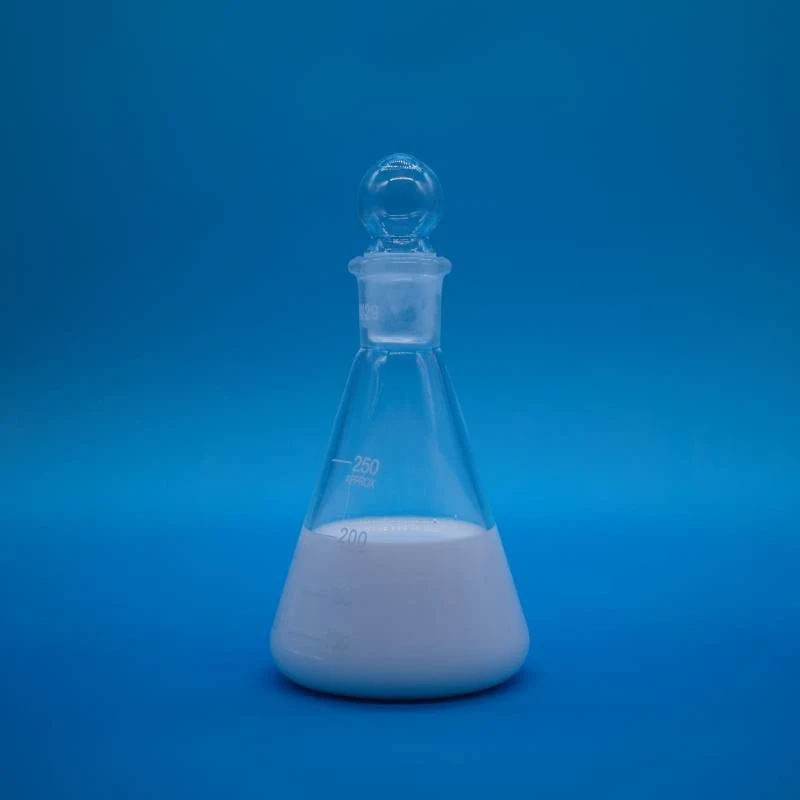
Shandong Peak-tech New Material Co., Ltd. is one of the most reliable manufacturers and suppliers of stainless steel polishing slurry in China. With a professional production team, we are able to meet the needs of the majority of our customers. Welcome to buy durable stainless steel polishing slurry for sale here from our factory.
Colloidal Silica Grades for Stainless Steel Polishing Slurry
Stainless steel polishing slurry uses controlled silica particles with application-specific chemistry to balance material removal, roughness, brightness and defect control. Selection must reflect the stainless grade, hardness, initial surface, polishing stage, pad and machine conditions.
| Model | Particle Size | SiO₂ Content | Na₂O Content | pH | Shelf Life |
|---|---|---|---|---|---|
| LS30 | 30–40 nm | 30–50% | ≤0.4% | 9.5–10.5 | ≥12 months |
| LS50 | 50–60 nm | 30–50% | ≤0.4% | 9.5–10.5 | ≥12 months |
| LS80 | 80–90 nm | 30–50% | ≤0.4% | 9.5–10.5 | ≥12 months |
| LS100 | 100–110 nm | 30–50% | ≤0.4% | 9.5–10.5 | ≥12 months |
| LS120 | 110–120 nm | 30–50% | ≤0.4% | 9.5–10.5 | ≥12 months |
| LS150 | 140–160 nm | 30–50% | ≤0.4% | 9.5–10.5 | ≥12 months |
| LS180 | 170–190 nm | 30–50% | ≤0.4% | 9.5–10.5 | ≥12 months |
The LS grades are abrasive candidates for stainless-steel polishing slurry development, not universal finished compounds. Confirm particle distribution, oversized particles, pH, surface chemistry and polishing performance on the actual stainless grade.
Match Particle Size to Removal and Surface-Finish Targets
LS30 and LS50
Finer LS options for final-polishing trials prioritizing low roughness and reduced scratch risk under compatible chemistry.
LS80, LS100 and LS120
Intermediate particle ranges for balancing stainless steel removal, surface roughness, brightness and defect control.
LS150 and LS180
Larger candidates for stock-removal trials, subject to strict control of scratches, embedded particles and surface defects.
pH 3–11
The pH can be reviewed after alloy compatibility, surface compatibility, target value and tolerance are defined.
Information Needed for Stainless Steel Polishing
Connect the abrasive specification with the alloy, polishing stage, equipment and required surface quality.
- Stainless steel substrate: identify grade, hardness, dimensions, initial roughness, weld or coating condition.
- Polishing stage: specify stock removal, intermediate polishing, final polishing or another process step.
- Particle specification: provide nominal size, distribution, oversized-particle limit, agglomerate limit and test method.
- Slurry chemistry: state SiO₂ content, target pH, additives, dilution water and permitted sodium level.
- Performance targets: define removal rate, roughness, flatness, gloss or brightness, scratches, pits and passivation requirements.
- Order details: include equipment, pad, trial quantity, annual demand, packaging and destination country.
Request a Stainless Steel Polishing Slurry Trial Grade
Send the stainless grade, hardness, polishing stage, target particle size, slurry chemistry, removal rate and surface-quality requirements.
Request a Polishing Slurry RecommendationProtect Product Stability During Storage
Packaging Options
Available polyethylene packaging sizes are 25 kg, 250 kg and 1000 kg.
Storage Temperature
Store at 0–40°C and protect from freezing. Temperatures below 0°C can cause irreversible gelation.
Direct Sunlight
Avoid prolonged exposure to direct sunlight during storage and transportation.
Container Closure
Keep containers closed to limit water evaporation and precipitation of solid silica particles.
Stainless Steel Polishing Slurry Questions
Which colloidal silica grades can be evaluated for stainless steel polishing slurry?
The standard grades are LS30, LS50, LS80, LS100, LS120, LS150 and LS180.
What particle-size range is available for polishing trials?
The published grade ranges start at 30–40 nm and extend to 170–190 nm.
Can the pH be customized?
Yes. The pH is listed as customizable within 3–11, subject to final specification confirmation.
Which polishing results should be validated?
Validate removal rate, surface roughness, flatness, brightness, scratches, pits, residue, slurry stability and lot-to-lot consistency.
How should stainless-steel polishing colloidal silica be stored?
Store it at 0–40°C, prevent freezing and direct sunlight, and keep the container closed.
Hot Tags: stainless steel polishing slurry, China stainless steel polishing slurry manufacturers, suppliers, factory
Stainless Steel Polishing Slurry Applications
LS grades can be evaluated as abrasive candidates for stainless steel polishing. Qualification requires grade-specific tests for removal rate, roughness, brightness, scratches, pits, residue and slurry stability.
Machined Stainless Steel Parts
Evaluated for precision-finished machined parts after particle distribution, pH, removal and corrosion behavior are qualified.
Automotive Stainless Components
Candidate slurries can be tested for decorative or functional stainless steel components with defined finish and defect targets.
Aerospace Stainless Components
Can be assessed for compatible precision components after alloy, dimensional and surface-integrity requirements are defined.
Stainless Steel Mold Surfaces
Can be evaluated for molds requiring controlled roughness, gloss and resistance to scratches or pits.
Pre-Passivation Surface Preparation
Selected particle ranges may be tested for surface preparation before passivation, subject to downstream compatibility.
Custom Stainless Steel Slurries
Supports development around a defined stainless grade, LS grade, oversized-particle limit, additives and controlled pH.


