


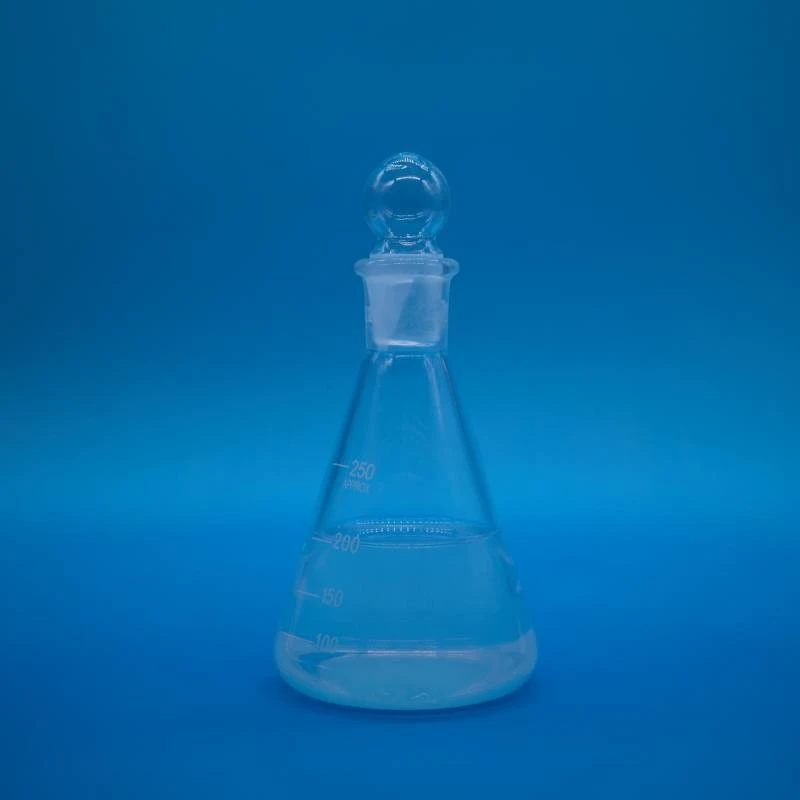
Shandong Peak-tech New Material Co., Ltd. is one of the most reliable manufacturers and suppliers of colloidal silica viscosity in China. With a professional production team, we are able to meet the needs of the majority of our customers. Welcome to buy durable colloidal silica viscosity for sale here from our factory.
Understanding Colloidal Silica Viscosity
Colloidal silica is normally a low-viscosity aqueous dispersion, but the measured value depends on solids content, particle size, surface chemistry, pH, temperature and test method. Viscosity is important for pumping, mixing, coating, slurry control and early detection of instability.
What Changes Colloidal Silica Viscosity?
| Factor | Typical Influence | What to Control | Warning Sign |
|---|---|---|---|
| SiO₂ Content | Higher solids generally increase viscosity | Concentration and evaporation | Unexpected rise after open storage |
| Particle Size | Smaller particles provide greater surface area | Grade and particle distribution | Different flow at equal solids |
| pH and Stabilizer | Affect particle charge and repulsion | Grade-specific stability window | Rapid thickening after pH change |
| Electrolytes | Can reduce repulsion and promote aggregation | Water, salts and additive sequence | Viscosity increase or gel particles |
| Temperature | Changes liquid flow and test result | Conditioning and measurement temperature | Results compared at different temperatures |
| Storage History | Heat, freezing or contamination can alter stability | Time, temperature and cleanliness | Trend outside normal lot behavior |
A rising viscosity trend can indicate concentration change, contamination or particle aggregation even before a complete gel forms.
Why Viscosity Matters in Industrial Use
Controls Transfer Consistency
Viscosity affects pump selection, dosing repeatability, line pressure, filtration and the ability to transfer material from drums or IBCs.
Affects Dispersion and Addition Sequence
A change in viscosity can alter mixing time, shear demand and local concentration when silica sol enters a binder, slurry or coating system.
Influences Film and Layer Formation
Flow, leveling, drainage, penetration, coat weight and sediment suspension depend on the complete formulation's rheology.
Provides an Early Process Signal
Routine viscosity trending can identify evaporation, contamination, aggregation or storage damage before visible gelation becomes severe.
How to Compare Viscosity Data Correctly
- Use one method: record instrument type, spindle or capillary, speed, sample volume and reporting unit.
- Control temperature: condition samples to the specified temperature, such as 20°C, before measurement.
- Prepare consistently: avoid foam, evaporation, contamination and unapproved high-shear mixing during sampling.
- Record sample history: include lot, storage duration, opening date, temperature exposure and dilution status.
- Compare like with like: do not compare values from different methods, temperatures or solids contents as if they were equivalent.
- Trend over time: monitor fresh material and aged samples to detect viscosity drift within the actual formulation.
- Investigate abnormal results: check pH, solids, appearance, particle aggregation and contamination before releasing material.
Request a Colloidal Silica Viscosity Specification
Send the application, target viscosity, measurement method and temperature, SiO₂ content, particle size, pH, process conditions and trial quantity.
Request a Viscosity-Matched GradeColloidal Silica Selection Resources
Colloidal Silica Viscosity Questions
What is the typical viscosity of colloidal silica?
Many silica sols are low-viscosity liquids. Peak-tech technical information gives a reference of less than 10 cP at 20°C for the cited acidic family, but each grade must be checked separately.
Are cP and mPa·s the same for viscosity reporting?
For dynamic viscosity, 1 cP equals 1 mPa·s. The measurement method and temperature must still be stated for a meaningful comparison.
Why does colloidal silica viscosity increase?
Possible causes include water evaporation, higher solids, lower temperature, pH change, electrolyte contamination, particle aggregation or progressing gelation.
Does low viscosity guarantee colloidal stability?
No. Viscosity is one indicator. Stability assessment may also require pH, solids, appearance, particle size, storage aging and formulation compatibility.
Can water be added to reduce viscosity?
Dilution changes solids and performance and may introduce destabilizing ions. Use compatible water and a validated addition procedure only after bench testing.
Hot Tags: colloidal silica viscosity, China colloidal silica viscosity manufacturers, suppliers, factory
Where Colloidal Silica Viscosity Matters
Measure viscosity under controlled conditions and validate the complete formulation rather than relying on the neat silica-sol value alone.
Investment Casting Slurries
Viscosity affects wetting, drainage, coat thickness, stucco pickup and long-term slurry maintenance.
Industrial Coatings
Controls pumping, application, leveling, film build, penetration and interaction with binders and pigments.
CMP Slurries
Influences particle transport, pad delivery, filtration, flow uniformity and polishing consistency.
Paper Coatings
Affects metering, coating weight, penetration, drying and compatibility with polymers or cationic additives.
Cement and Refractory Mixes
Changes dosing, dispersion, mix flow, working time and the distribution of inorganic binder.
Bulk Transfer and Dosing
Determines pump selection, line pressure, flowmeter performance and repeatable addition from drums or IBCs.


