


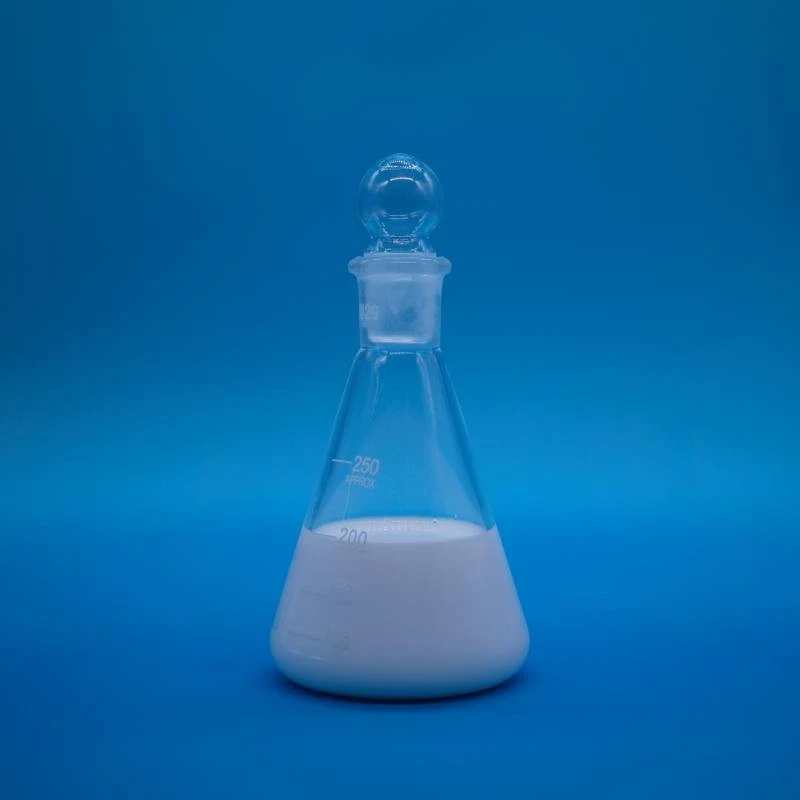
Shandong Peak-tech New Material Co., Ltd. is one of the most reliable manufacturers and suppliers of colloidal silica solid in China. With a professional production team, we are able to meet the needs of the majority of our customers. Welcome to buy durable colloidal silica solid for sale here from our factory.
What Does Colloidal Silica Solid Mean?
In liquid colloidal silica, "solid" usually refers to the weight percentage of dispersed SiO₂ remaining after water and other volatile components are removed under a defined test method. Peak-tech silica-sol families include product directions from approximately 20 to 40 wt% SiO₂, with specific grades such as 30% or 40% solids.
How Solids Content Changes Handling and Use
| Product Direction | SiO₂ Content | Water in 100 kg* | Typical Selection Reason | Key Process Check |
|---|---|---|---|---|
| 20% Solids | 20 kg SiO₂ | Approximately 80 kg | Lower delivered solids and easier dilution planning | Water load and drying time |
| 30% Solids | 30 kg SiO₂ | Approximately 70 kg | Common balance of solids and handling | Viscosity, pumping and formulation balance |
| 40% Solids | 40 kg SiO₂ | Approximately 60 kg | More silica delivered per unit mass | Stability, viscosity and controlled dilution |
*Simplified mass balance assuming the balance is primarily water. Actual products also contain stabilizing ions and minor nonvolatile or volatile components. Use the grade's analytical method and CoA value for formulation calculations.
Why Colloidal Silica Solids Matter
Controls Active Inorganic Content
Solids percentage determines how much liquid product is required to deliver a target dry-silica mass into the formulation.
Affects Drying and Process Balance
Lower-solids grades introduce more water for the same silica dose, which can change drying time, energy demand, slurry concentration and film formation.
Influences Pumping and Mixing
Higher solids can increase viscosity and sensitivity to evaporation or contamination, although particle size and stabilization chemistry also matter.
Changes Delivered-Mass Efficiency
More concentrated grades may reduce water shipment, but handling, dilution, stability and application performance must be considered together.
Using Solids Content in Production
- Dosage formula: liquid silica sol required = target dry SiO₂ mass ÷ solids fraction.
- Example: delivering 30 kg of dry SiO₂ requires 100 kg of 30% sol or 75 kg of 40% sol, before considering specification tolerance.
- Test method: confirm drying temperature, drying time and endpoint because different methods can produce different reported values.
- Batch calculation: use the actual CoA result when precise solids balance is required rather than only the nominal grade name.
- Dilution: use compatible water and add it through a validated sequence; hardness or ionic contamination may destabilize the sol.
- Evaporation control: keep containers sealed because water loss raises apparent solids and may increase viscosity or create deposits.
- Performance validation: equal dry-silica dosage does not guarantee identical behavior when grades have different particle sizes, pH or stabilizers.
Request a Colloidal Silica Solids Grade
Send the target SiO₂ content, application, particle size, pH, stabilizing system, viscosity limit, dry-silica dosage and trial quantity.
Request a Solids-Matched GradeCompare Colloidal Silica by Solids Content
Colloidal Silica Solids Questions
What does 30% colloidal silica mean?
It normally means the liquid contains about 30 wt% SiO₂ solids, so 100 kg of product delivers approximately 30 kg of silica according to the specified analytical method.
Is colloidal silica a solid or a liquid?
Commercial silica sol is a liquid dispersion containing solid nanoscale silica particles in water. The solids percentage describes the dispersed SiO₂ content.
Can dried colloidal silica be redispersed?
Not reliably. Drying can create irreversible aggregation or a silica network, so adding water may not restore the original particle size and stability.
Does higher solids always mean better performance?
No. Higher solids deliver more silica per kilogram, but viscosity, stability, water balance, particle size, pH and application compatibility determine performance.
How is colloidal silica solids content measured?
A weighed sample is dried under a defined method and the remaining nonvolatile mass is calculated. Confirm the specified temperature, time and endpoint.
Hot Tags: colloidal silica solid, China colloidal silica solid manufacturers, suppliers, factory
Where Colloidal Silica Solids Matter
Select solids content together with particle size, pH, viscosity and stabilization chemistry; equal dry-silica dosage does not make different grades interchangeable.
Investment Casting
Solids affect slurry balance, water load, drying, binder delivery and ceramic-shell build.
Industrial Coatings
Determine silica dosage, formulation water, film build, drying and handling viscosity.
Refractory Binders
Control delivered inorganic binder, mix consistency, drying demand and final ceramic network.
Paper and Textile
Influence dilution, add-on level, process water and metering in treatment formulations.
Cement and Concrete
Set active silica dose and added water while affecting pumping and penetration behavior.
Bulk Shipping
Higher solids can reduce transported water but require validation of stability, viscosity and unloading.


