


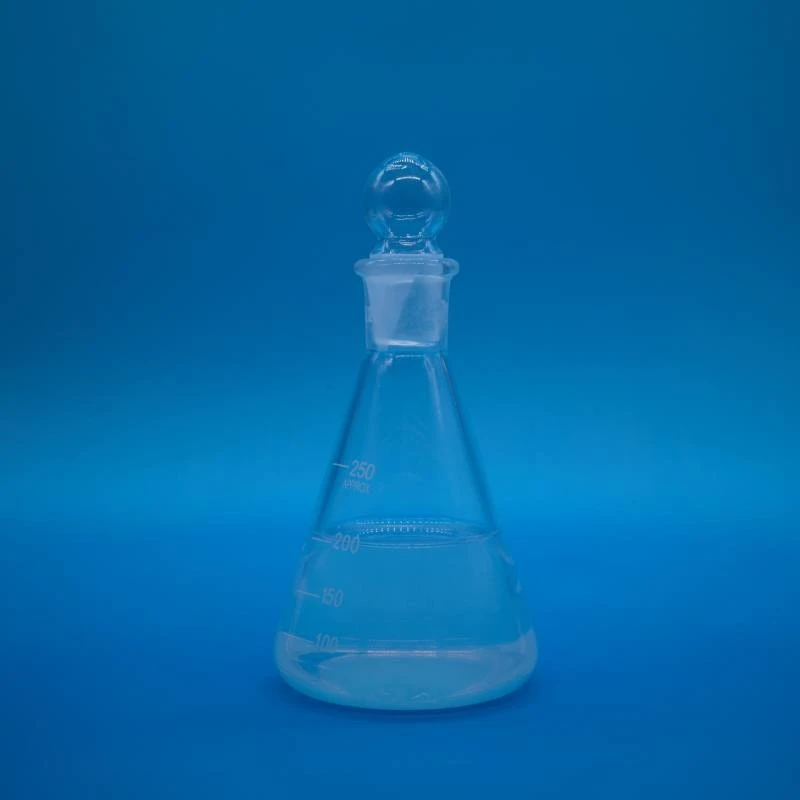
Shandong Peak-tech New Material Co., Ltd. is one of the most reliable manufacturers and suppliers of colloidal silica properties in China. With a professional production team, we are able to meet the needs of the majority of our customers. Welcome to buy durable colloidal silica properties for sale here from our factory.
Core Properties of Colloidal Silica
Colloidal silica is a water-based dispersion of nanoscale amorphous SiO₂ particles. Its performance is governed by the combination of particle size, solids content, pH, stabilizing chemistry, surface charge, purity, viscosity and particle distribution-not by any single property alone.
Colloidal Silica Property Overview
| Property | Family Range / Reference | Why It Matters | Confirm Before Ordering |
|---|---|---|---|
| Appearance | Milky translucent liquid | Quick check for abnormal gel or contamination | Grade-specific appearance standard |
| SiO₂ Content | 20–40 wt% | Delivered silica, water load and dosage | Nominal value and tolerance |
| Particle Size | 3–180 nm | Surface area, reactivity, packing and polishing | Method and distribution |
| pH | 2.0–10.5 | Stability, charge and formulation compatibility | Grade range and temperature |
| Density | 1.10–1.30 g/cm³* | Volumetric dosing and logistics | Temperature and method |
| Viscosity | <10 mPa·s at 20°C* | Pumping, mixing, coating and stability trend | Instrument, temperature and grade |
| Dispersion Medium | Deionized water* | Water-based formulation compatibility | Ionic profile and stabilizer |
*Density, viscosity and deionized-water medium are cited from the referenced acidic colloidal silica technical data and should not be treated as universal specifications for every product family.
Properties That Drive Industrial Performance
Nanoscale Reactivity
Smaller particles generally provide more surface area per unit mass, supporting interaction with substrates, binders, catalysts and polishing surfaces.
Controlled Particle Repulsion
pH, charge and stabilizing ions help keep particles separated. Electrolytes, multivalent ions or incompatible additives can reduce stability.
Binding after Drying or Curing
Silica particles can develop a Si–O–Si network as water is removed, providing inorganic binding in compatible ceramic, refractory and coating systems.
Nonorganic Silica Structure
Amorphous silica can support heat-resistant inorganic formulations, subject to the complete material system, firing cycle and service temperature.
Properties Buyers Should Define Together
- Particle size and distribution: select according to surface activity, packing, permeability, polish or coating behavior.
- SiO₂ content: balance active solids, water load, viscosity, drying and transport efficiency.
- pH and stabilizer: match binders, catalysts, fibers, pigments, salts, substrates and process water.
- Surface charge or modification: specify anionic, cationic, organic-modified or inorganic-modified behavior when required.
- Purity: define sodium, metal ions and element-specific limits for electronics, catalysts, batteries or polishing.
- Viscosity and density: confirm test temperature and method for pumping, metering and mass-volume conversion.
- Storage and shelf life: specify packaging, temperature, freeze protection and expected inventory duration.
Request a Colloidal Silica Property Match
Send the application, target particle size, SiO₂ content, pH, stabilizer, purity limits, viscosity, process conditions and trial quantity.
Request a Property-Matched GradeExplore Colloidal Silica by Property
Colloidal Silica Property Questions
What are the main properties of colloidal silica?
Main properties include particle size, solids content, pH, stabilizing ion, surface charge, purity, viscosity, density and particle-size distribution.
Is colloidal silica crystalline or amorphous?
The silica particles described in this product family are amorphous rather than crystalline. Confirm the selected grade's documentation for compliance review.
How does particle size affect colloidal silica?
Particle size influences surface area, reactivity, packing, pore structure, viscosity response, polishing behavior and interaction with other ingredients.
Why is pH important for colloidal silica?
pH affects surface charge and colloidal stability and can determine compatibility with binders, pigments, salts, catalysts and substrates.
Can all listed property limits be combined in one grade?
No. The figures describe a broad product-family envelope. Each feasible grade has a specific combination of particle size, solids, pH, stabilizer, purity and viscosity.
Hot Tags: colloidal silica properties, China colloidal silica properties manufacturers, suppliers, factory
How Colloidal Silica Properties Guide Use
Application performance comes from a matched property set. Evaluate the complete grade and formulation under representative process conditions.
Particle Size
Guides surface activity, packing, permeability and polishing action in casting, coatings and precision finishing.
Solids Content
Controls delivered silica, formulation water, drying load, viscosity and shipping efficiency.
pH and Charge
Determine compatibility with binders, fibers, pigments, catalysts, salts and mineral surfaces.
Purity
Becomes critical for electronics, batteries, catalysts, optical polishing and contamination-sensitive processes.
Viscosity
Affects pumping, dosing, mixing, coating, slurry control and early detection of destabilization.
Inorganic Binding
Supports ceramic shells, refractories, mineral coatings and heat-resistant networks after drying or curing.


