


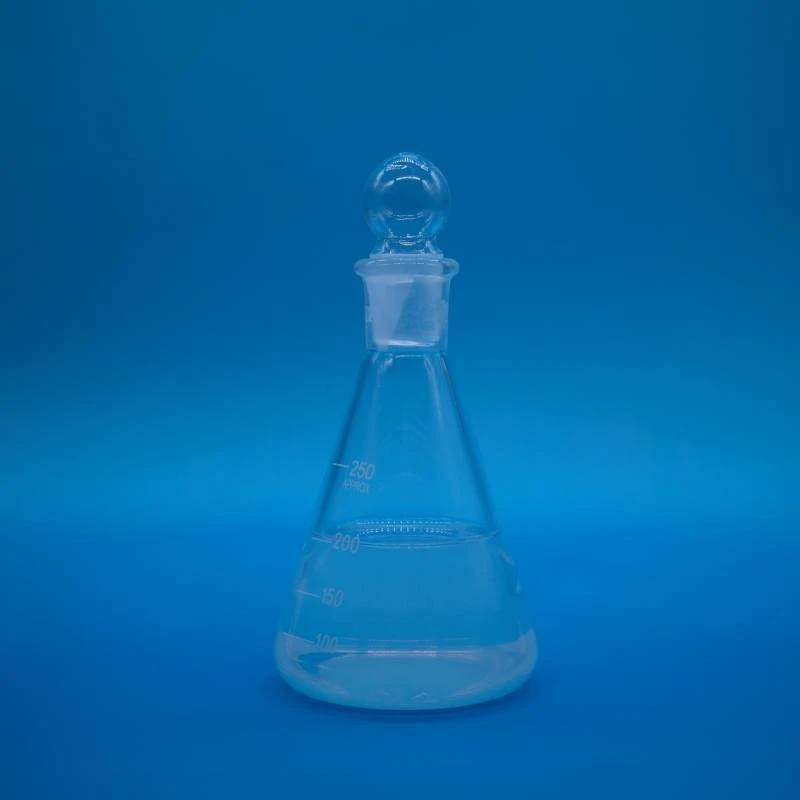
Shandong Peak-tech New Material Co., Ltd. is one of the most reliable manufacturers and suppliers of silica sol for lithium battery in China. With a professional production team, we are able to meet the needs of the majority of our customers. Welcome to buy durable silica sol for lithium battery for sale here from our factory.
Silica Sol for Lithium Battery Grade Comparison
| Model | Particle Size | SiO₂ Content | Metal Ions | pH | Shelf Life |
|---|---|---|---|---|---|
| HP25D10 | 10–20 nm | 25±1% | <20 ppm | 7–9 | ≥12 months |
| HP3010 | 10–20 nm | 30±1% | <50 ppm | 7–9 | ≥12 months |
| HP2510A | 10–20 nm | 21–25% | <50 ppm | 2–4 | ≥12 months |
| HP4010A | 10–20 nm | 38–42% | <50 ppm | 2–4 | ≥12 months |
Aluminum present as Al₂O₃ is excluded from the listed total. HP25D10 and HP3010 are NH₄⁺-stabilized. Lithium-battery qualification requires element-specific impurities, particle controls, moisture and electrochemical compatibility criteria.
Build the Specification Around Cell Chemistry
A lithium-battery material cannot be selected from total metal ions alone. The permitted stabilizer, individual elements, particle distribution, binder system and electrochemical test plan must be agreed for the intended component.
HP25D10
Provides the tightest published total metal-ion limit with 25±1% SiO₂, 10–20 nm particles and a pH range of 7–9.
HP3010
A near-neutral, NH₄⁺-stabilized option for compatible battery-material coating or formulation trials.
HP2510A
An acidic candidate with 21–25% SiO₂ where the surrounding materials and process tolerate the lower pH range.
HP4010A
A higher-solids acidic candidate for controlled dilution and formulation trials requiring reduced added liquid.
Lithium-Battery Data Needed Before Sampling
- Application component: identify separator coating, electrode formulation, ceramic coating, material treatment or another use.
- Cell chemistry: provide cathode and anode systems, electrolyte direction, separator type and voltage window.
- Elemental limits: specify sodium, iron, aluminum and other individual impurity limits with methods and detection limits.
- Particle requirements: define primary size, PSD, oversized-particle limit, agglomerate control, filtration and metrology.
- Formulation process: identify binder, solvent phase, solids, mixing sequence, coating method, drying and target coat weight.
- Quality controls: state moisture, COA fields, packaging cleanliness, lot traceability, retention samples and change notification.
Confirm Process and Electrochemical Compatibility
Slurry Compatibility
Monitor viscosity, pH, agglomeration, settling and coating stability with the actual binder, powders and solvent phase.
Coating Performance
Evaluate dispersion, coat-weight uniformity, adhesion, drying, porosity and surface defects under production-relevant conditions.
Material Interaction
Check the effect of residual water, stabilizer and individual ions on active materials, separator and electrolyte compatibility.
Cell Testing
Complete application-specific cell testing for impedance, capacity, rate capability, cycle life, storage and safety-related criteria.
Request Silica Sol for a Lithium-Battery Trial
Send the component, cell chemistry, formulation, particle and elemental limits, process conditions, test criteria and trial quantity.
Request Battery Grade ReviewProtect High-Purity Material Quality
Packaging Review
Polyethylene packaging options are 25 kg, 250 kg and 1000 kg. Confirm cleanliness and container requirements before ordering.
Storage Temperature
Store at 0–40°C and prevent freezing. Temperatures below 0°C can cause irreversible gelation.
Contamination Control
Use clean, compatible transfer equipment and prevent contact with uncontrolled metals, dust or process residues.
Container Closure
Keep containers closed to reduce evaporation, contamination and precipitation of solid silica particles.
Silica Sol for Lithium Battery FAQ
Which silica-sol grades can be evaluated for lithium-battery applications?
The published high-purity candidates are HP25D10, HP3010, HP2510A and HP4010A.
Which grade has the lowest published total metal-ion limit?
HP25D10 is listed below 20 ppm. The other three HP grades are listed below 50 ppm.
Is the total metal-ion value sufficient for battery qualification?
No. Buyers should specify individual elements, analytical methods, detection limits and permitted levels for the target cell chemistry.
Are HP25D10 and HP3010 sodium-stabilized?
No. The published data identifies HP25D10 and HP3010 as NH₄⁺-stabilized grades.
Which battery tests should be completed?
Complete formulation stability, coating, impurity, moisture and application-specific electrochemical tests before production approval.
Hot Tags: silica sol for lithium battery, China silica sol for lithium battery manufacturers, suppliers, factory
Applications of Silica Sol for Lithium Battery
High-purity HP grades can be evaluated in compatible lithium-battery material systems. Qualification requires application-specific impurity, moisture, particle, processing and electrochemical validation.
Separator Coating Formulations
Silica sol can be screened as a nanoscale inorganic component after coating adhesion, porosity, wetting and impurity limits are defined.
Ceramic-Coated Separators
Candidate grades may be tested with ceramic powders and binders for dispersion, coating uniformity and electrolyte compatibility.
Aqueous Electrode Formulations
High-purity grades can be evaluated only after binder compatibility, slurry rheology, drying and electrochemical effects are verified.
Battery Material Surface Treatment
Controlled nanosilica may be assessed in compatible treatment processes for active or supporting battery materials.
High-Purity Inorganic Coatings
Selected grades can be screened where element-specific limits, particle distribution and coating cleanliness are controlled.
Custom Battery Material Development
Supports development requiring defined stabilizers, metal limits, particle metrology, lot traceability and change control.


