


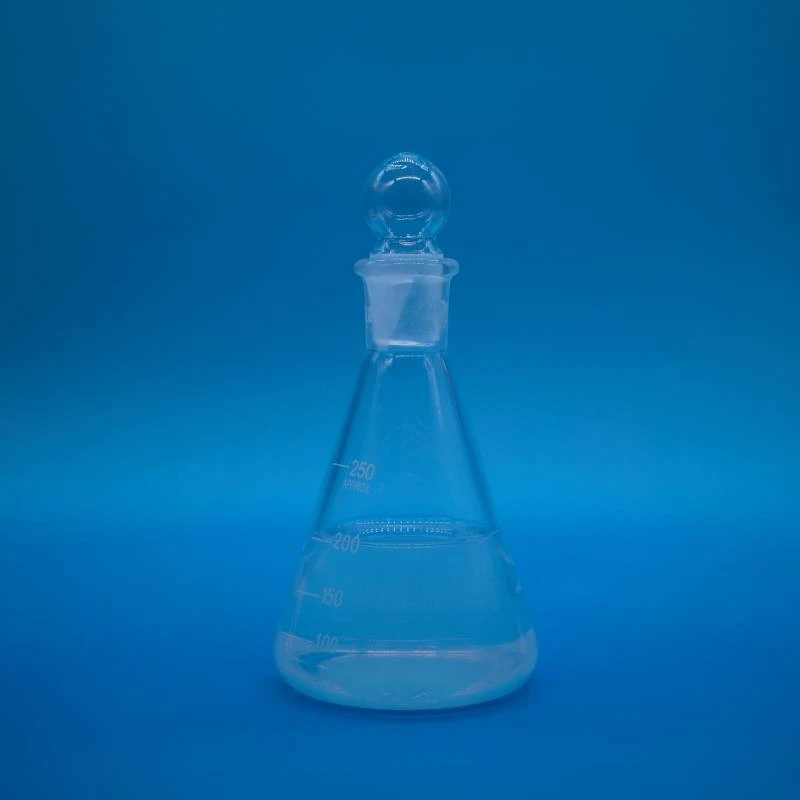
Shandong Peak-tech New Material Co., Ltd. is one of the most reliable manufacturers and suppliers of aerospace casting silica sol in China. With a professional production team, we are able to meet the needs of the majority of our customers. Welcome to buy durable aerospace casting silica sol for sale here from our factory.
Silica Sol for Aerospace Ceramic Shell Trials
Peak-tech aerospace casting silica sol is an aqueous inorganic binder for qualification in investment-casting ceramic shells used for complex, high-integrity metal components. PC10 and PC20 provide published grade directions for backup and face-coat slurry development.
Aerospace Casting Silica Sol Comparison
| Model | Recommended Direction | SiO₂ Content | Particle Size | Na₂O Content | pH | Shelf Life |
|---|---|---|---|---|---|---|
| PC10 | Backup-layer trials | 27±1% | 8–15 nm | ≤0.4% | 9.5–10.5 | ≥12 months |
| PC20 | Face-coat trials | 30±1% | 10–20 nm | ≤0.4% | 9.5–10.5 | ≥12 months |
Published technical values should be confirmed against the current specification, test methods and batch CoA. The recommended directions are starting points; the complete shell system requires foundry qualification.
Control the Complete Ceramic Shell Process
Prioritize Surface Integrity
Evaluate wetting, refractory compatibility, slurry stability, coat uniformity and metal-facing behavior for the required casting surface and defect limits.
Build Strength without Excess Mass
Balance green strength, fired strength, permeability, drying time and shell thickness for handling, dewaxing and metal pouring.
Validate Dewaxing and Firing
Test cracking resistance, residual strength, thermal expansion and burnout behavior under the foundry's actual autoclave and firing cycles.
Control Interfacial Reactions
Match face-coat refractory, binder, additives and firing conditions to nickel-, cobalt-, titanium- or other alloy requirements.
Information Needed for Grade Recommendation
- Component and alloy: identify the casting, alloy family, section thickness, geometry, tolerances and surface requirements.
- Shell stage: specify face coat, transition layer, backup layer or a complete binder-comparison program.
- Refractory system: provide flour and stucco chemistry, particle distribution, additives, wetting agents and antifoam.
- Slurry control: state solids, binder ratio, viscosity method, pH, temperature, mixing, aging and maintenance procedures.
- Drying and firing: include humidity, airflow, layer interval, dewaxing, firing temperature, hold time and cooling profile.
- Acceptance criteria: define green/fired strength, permeability, dimensional results, surface finish and casting-defect limits.
- Quality documentation: list CoA, traceability, change notification, audit, restricted substances and customer-specific requirements.
Request an Aerospace Casting Trial Grade
Send the alloy, shell stage, refractory system, slurry controls, drying and firing cycle, qualification tests, documentation requirements and trial quantity.
Request a Casting Qualification SampleFrom Slurry Trial to Foundry Approval
Bench Slurry Study
Confirm mixing response, viscosity stability, wetting, drainage, foaming and compatibility before producing trial shells.
Shell and Casting Trials
Compare layer quality, drying, shell strength, permeability, dewax performance, dimensional results and metal surface condition.
Packaging Options
Available polyethylene packaging sizes are 25 kg, 250 kg and 1000 kg, subject to order confirmation.
Storage Conditions
Store at 0–40°C, prevent freezing, avoid prolonged direct sunlight and keep containers closed to protect colloidal stability.
Aerospace Casting Silica Sol Questions
Which silica sol is used for face coats?
PC20 is the published face-coat direction, with 30±1% SiO₂ and a 10–20 nm particle-size range. It must still be qualified with the actual refractory and alloy system.
Which grade is intended for backup-layer trials?
PC10 is the published backup-layer direction, with 27±1% SiO₂ and an 8–15 nm particle-size range. Final suitability depends on the complete shell process.
Is the silica sol already aerospace certified?
No aerospace or OEM approval is claimed on this page. Qualification is performed within the foundry's controlled process and customer approval requirements.
Can one binder be used for every aerospace alloy?
No. Alloy reactivity, face-coat refractory, firing cycle, component geometry and surface requirements can require different shell-system choices.
What should be measured during qualification?
Evaluate slurry stability, coating behavior, drying, green and fired strength, permeability, dewax performance, dimensions, surface finish and casting defects.
Hot Tags: aerospace casting silica sol, China aerospace casting silica sol manufacturers, suppliers, factory
Aerospace Investment Casting Trial Areas
The foundry must qualify every binder, refractory and process combination against the component drawing, alloy specification and customer approval plan.
Turbine Airfoils
Develop controlled face and backup shells for complex airfoil geometry, fine surfaces and tight dimensional requirements.
Engine Hardware
Evaluate shell strength, permeability and thermal behavior for high-temperature alloy brackets, housings and structural hardware.
Titanium Castings
Qualify binder and refractory compatibility carefully to manage metal–mold reactions and surface requirements.
Thin-Wall Components
Balance face-coat quality, permeability, shell thickness and handling strength for thin or intricate sections.
Large Structural Castings
Assess drying consistency, shell build, dewax resistance and fired strength for larger aerospace structures.
Prototype Qualification
Run controlled binder comparisons with documented slurry data, shell tests, casting results and lot traceability.


