


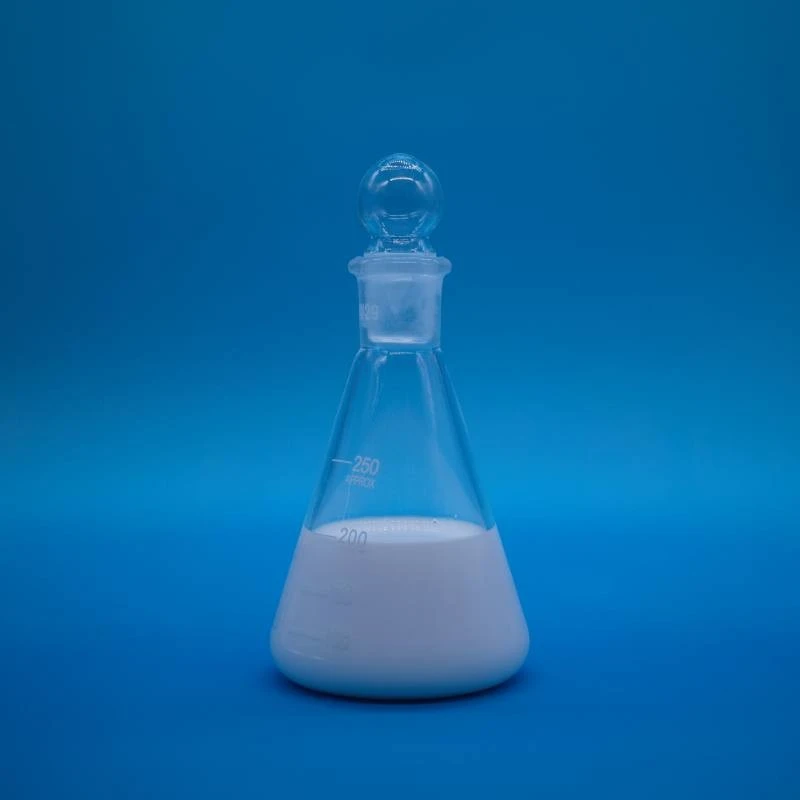
Shandong Peak-tech New Material Co., Ltd. is one of the most reliable manufacturers and suppliers of automotive silica sol in China. With a professional production team, we are able to meet the needs of the majority of our customers. Welcome to buy durable automotive silica sol for sale here from our factory.
Automotive Silica Sol for Process Development
Peak-tech automotive silica sol is an aqueous dispersion of amorphous nano silica for evaluation in automotive coatings, catalyst-support systems, precision casting, glass and ceramic polishing, friction materials and electric-vehicle component coatings. Grades are screened by particle size, concentration, pH, stabilizing chemistry and impurity profile.
Parameters for Automotive Grade Screening
| Grade Direction | SiO₂ Content | Particle Size | Primary Function | Typical Trial Area |
|---|---|---|---|---|
| Fine-Particle Grade | 20–40 wt%* | 3–20 nm | Surface activity and fine finishing | Polishing, catalyst and functional coatings |
| General Automotive Grade | 20–40 wt%* | 20–100 nm | Binding and reinforcement | Coatings, casting and friction materials |
| Large-Particle Grade | 20–40 wt%* | 100–180 nm | Packing and thermal network | Ceramic shells and heat-resistant systems |
*The values describe the broader Peak-tech silica-sol family and are not simultaneous specifications for one automotive grade. Final values depend on particle size, concentration, stabilizer, modification chemistry and process requirements.
Match the Grade to the Automotive Process
Screen Hardness and Adhesion
Coating trials should evaluate dispersion, film formation, adhesion, abrasion, corrosion exposure, thermal cycling and compatibility with the full binder system.
Control Surface Area and Thermal Behavior
Catalyst-support evaluations should define substrate, active phase, pore structure, washcoat rheology, calcination and thermal-aging requirements.
Balance Binding and Final Finish
Casting and polishing processes require controlled particles, stable viscosity and repeatable behavior against the actual alloy, ceramic or glass component.
Define Lot and Change Control
State testing methods, tolerance, CoA items, restricted-substance requirements, traceability, packaging and change-notification expectations.
Data Needed for Product Recommendation
- Part and process: identify coating, catalyst, investment casting, polishing, friction material, battery component or another operation.
- Target specification: provide SiO₂ content, particle size, pH, viscosity, density, stabilizing system and impurity limits.
- Formulation: list resins, pigments, catalysts, salts, surfactants, solvents, abrasives and other additives with dosage.
- Processing: state mixing order, dilution water, shear, filtration, coating or slurry method, drying, curing, firing or calcination conditions.
- Performance criteria: define adhesion, hardness, scratch, corrosion, thermal aging, polishing finish, shell strength or other test targets.
- Automotive requirements: specify restricted substances, PPAP-related data, traceability, change control and customer-specific documentation.
- Commercial scope: include laboratory quantity, validation quantity, annual demand, packaging and destination country.
Request an Automotive Silica Sol Trial Grade
Send the component, manufacturing process, target specification, formulation, validation tests, required documents and trial quantity for technical screening.
Request an Automotive Trial GradeControl the Route from Lab to Production
Compatibility Testing
Screen stability, viscosity, filtration and performance using the complete formulation and actual production water, additives and substrates.
Process Validation
Confirm behavior through representative mixing, coating, casting, polishing, curing, firing or thermal-aging conditions before approval.
Packaging Options
Packaging may include 25 kg drums, 200/250 kg plastic drums and 1000 kg IBCs, subject to grade and customer requirements.
Storage Conditions
Keep containers sealed and protect silica sol from freezing, contamination and prolonged direct sunlight. Follow grade-specific instructions.
Automotive Silica Sol Questions
What is automotive silica sol used for?
It can be evaluated in automotive coatings, catalyst carriers, ceramic-shell casting, glass or ceramic polishing, friction materials and selected electric-vehicle component coatings.
Is silica sol the same as tire-grade silica?
No. Silica sol is a liquid colloidal dispersion. Tire compounds commonly use dry precipitated silica as a reinforcing filler. The products are not interchangeable without formulation development.
Can silica sol improve automotive coating hardness?
Selected grades may contribute to hardness or abrasion resistance, but results depend on binder compatibility, dosage, dispersion, film formation and curing. Comparative testing is required.
Can automotive documentation requirements be reviewed?
Yes. Provide the required CoA items, restricted-substance declarations, traceability, change-control and customer-specific documents for feasibility review.
Should a trial be completed before production approval?
Yes. Qualify the material through formulation, component, process and durability testing under representative manufacturing and service conditions.
Hot Tags: automotive silica sol, China automotive silica sol manufacturers, suppliers, factory
Automotive Silica Sol Trial Areas
Each use requires formulation, component and process validation against the applicable automotive specification and customer approval system.
Automotive Coatings
Evaluate dispersion, adhesion, hardness, abrasion, corrosion exposure and thermal cycling in compatible coating systems.
Emission Catalyst Supports
Screen washcoat rheology, surface area, pore structure, adhesion, calcination and thermal-aging performance.
Precision-Cast Components
Use as a candidate ceramic-shell binder for cast automotive hardware requiring shell strength and dimensional control.
Glass and Ceramic Polishing
Test particle control, removal rate, surface finish and scratch behavior on automotive glass or ceramic components.
Friction Materials
Evaluate inorganic binding and heat-resistant structure in compatible brake or friction-material development formulations.
EV Component Coatings
Screen silica sol in battery-separator, thermal-protection or insulating coating research under defined electrical and thermal criteria.


