


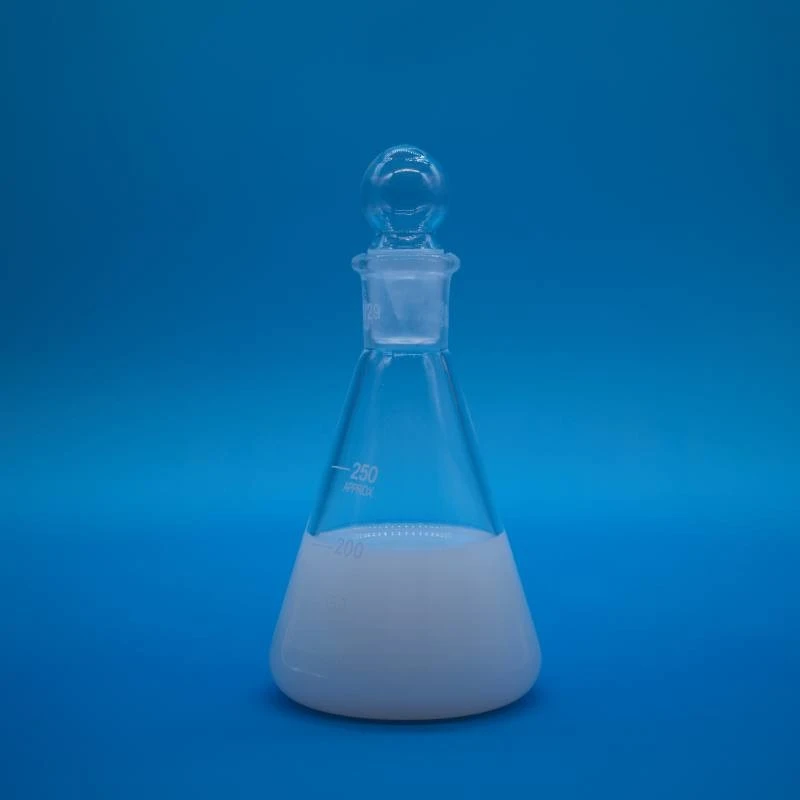
Shandong Peak-tech New Material Co., Ltd. is one of the most reliable manufacturers and suppliers of colloidal silica for ceramics in China. With a professional production team, we are able to meet the needs of the majority of our customers. Welcome to buy durable colloidal silica for ceramics for sale here from our factory.
Colloidal Silica for Ceramics Grade Comparison
| Model | Particle Size | SiO₂ Content | Na₂O Content | pH | Shelf Life |
|---|---|---|---|---|---|
| HC4010 | 10–15 nm | 40±1% | ≤0.4% | 9.5–10.5 | ≥12 months |
| HC4020 | 20–30 nm | 40±1% | ≤0.4% | 9.5–10.5 | ≥12 months |
| HC5020 | 20–30 nm | 50±1% | ≤0.4% | 9.5–10.5 | ≥12 months |
The listed HC grades are representative candidates for ceramic binder and processing trials. Confirm ceramic powder chemistry, slurry stability, forming method, drying, firing and final properties before selection.
Balance Silica Solids, Particle Size and Processing
Fine-Particle 40% Candidate
HC4010 combines 40±1% SiO₂ with 10–15 nm particles for ceramic slurry or binder trials requiring finer nanosilica.
Larger-Particle 40% Candidate
HC4020 provides 40±1% SiO₂ with 20–30 nm particles for comparative dispersion, green-body binding and processing evaluation.
Higher-Solids 50% Candidate
HC5020 provides 50±1% SiO₂ with 20–30 nm particles where higher silica loading or reduced added liquid is a formulation target.
Test the Complete Ceramic System
Verify slurry stability, rheology, green strength, drying behavior, shrinkage, firing response, porosity and final strength.
Information Needed for Ceramic Evaluation
Define the ceramic composition, forming route and thermal process before selecting a colloidal silica candidate.
- Ceramic composition: identify ceramic powders, fillers, dispersants, binders and other formulation components.
- Application: specify slurry casting, ceramic forming, coating, impregnation, bonding or another use.
- Addition requirement: provide the target SiO₂ content, particle size, sodium limit, pH and dosage basis.
- Process targets: state rheology, green strength, drying rate, shrinkage, firing temperature, porosity and strength requirements.
- Quality requirements: provide the test method, certificate requirements and acceptance limits.
- Order details: include trial quantity, annual demand, packaging and destination country.
Request Colloidal Silica for a Ceramic Trial
Send the ceramic composition, forming method, dosage basis, drying and firing conditions, target properties and required quantity.
Request a Grade RecommendationProtect Product Stability During Storage
Packaging Options
Available polyethylene packaging sizes are 25 kg, 250 kg and 1000 kg.
Storage Temperature
Store at 0–40°C and protect from freezing. Temperatures below 0°C can cause irreversible gelation.
Direct Sunlight
Avoid prolonged exposure to direct sunlight during storage and transportation.
Container Closure
Keep containers closed to limit water evaporation and precipitation of solid silica particles.
Colloidal Silica for Ceramics Questions
Which colloidal silica grades can be evaluated for ceramics?
Representative high-solids candidates include HC4010, HC4020 and HC5020. Final selection depends on the ceramic composition, process and target properties.
Why evaluate colloidal silica in ceramic formulations?
It provides dispersed nanoscale silica in water and can be evaluated as an inorganic binder or functional silica component. Results depend on dosage, mixing, drying and firing.
Which ceramic processing properties should be tested?
Test slurry dispersion, viscosity, sedimentation, green strength, drying shrinkage, cracking, firing behavior, porosity, strength and appearance.
Can particle size be customized?
Yes. Particle size is identified as customizable and should be confirmed with the target value, tolerance and test method.
How should colloidal silica for ceramic use be stored?
Store it at 0–40°C, prevent freezing and direct sunlight, and keep the container closed.
Hot Tags: colloidal silica for ceramics, China colloidal silica for ceramics manufacturers, suppliers, factory
Applications of Colloidal Silica for Ceramics
High-solids colloidal silica can be evaluated as an inorganic binder or functional silica component in compatible ceramic systems. Qualification must use the actual powders, additives, forming process, drying cycle and firing conditions.
Ceramic Slurry Binding
Evaluated as an aqueous inorganic binder after slurry stability, viscosity, sedimentation and mixing sequence are confirmed.
Green Ceramic Bodies
Suitable candidates can be tested where handling strength, drying integrity and controlled burnout or firing behavior are required.
Technical Ceramics
Controlled nanosilica can be assessed in compatible oxide and composite ceramic formulations after impurity requirements are defined.
Ceramic Coatings and Layers
Can be evaluated as a silica-based binder in mineral and ceramic coating layers requiring controlled adhesion and thermal processing.
Porous Ceramic Materials
Suitable grades may be tested in porous bodies, filters and insulation materials where binder distribution and fired porosity matter.
Custom Ceramic Formulations
Supports trials requiring selected silica solids, particle size, pH, alkali limit and dosage under a defined drying and firing cycle.


