


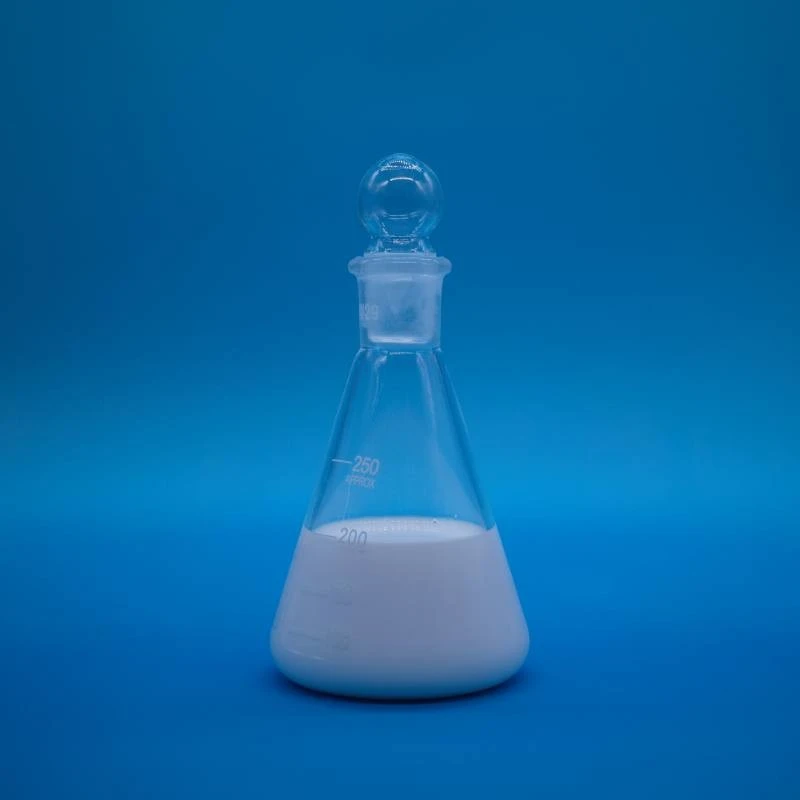
Shandong Peak-tech New Material Co., Ltd. is one of the most reliable manufacturers and suppliers of colloidal silica densifier in China. With a professional production team, we are able to meet the needs of the majority of our customers. Welcome to buy durable colloidal silica densifier for sale here from our factory.
Colloidal Silica Densifier Grade Comparison
| Model | Particle Size | SiO₂ Content | Stabilizer / Alkali Limit | pH | Shelf Life |
|---|---|---|---|---|---|
| P3010 | 10–20 nm | 30±1% | Potassium stabilized; K₂O ≤0.3% | 9–10 | ≥12 months |
| HC4010 | 10–15 nm | 40±1% | Alkaline; Na₂O ≤0.4% | 9.5–10.5 | ≥12 months |
| HC4020 | 20–30 nm | 40±1% | Alkaline; Na₂O ≤0.4% | 9.5–10.5 | ≥12 months |
These are representative colloidal silica concentrates for densifier formulation trials, not finished ready-to-use floor densifiers. Confirm dilution, wetting, penetration, reaction, residue and final floor performance in the actual concrete system.
Match Stabilization, Particle Size and Supplied Solids
P3010 for Low-Sodium Direction
P3010 provides 30±1% SiO₂ and 10–20 nm particles where a potassium-stabilized concentrate is preferred for densifier development.
HC4020 for Higher Solids
HC4020 provides 40±1% SiO₂ with 20–30 nm particles for trials balancing supplied solids, dilution and surface penetration.
HC4010 for Finer Particles
HC4010 combines 40±1% SiO₂ with 10–15 nm particles for comparative trials requiring a finer alkaline silica dispersion.
Test the Finished Densifier
Verify storage stability, dilution, wetting, penetration, dry time, residue, gloss response, abrasion resistance and slip-related effects.
Information Needed for Densifier Evaluation
Define the concrete substrate, formulation route and application process before selecting a colloidal silica concentrate.
- Substrate: identify new or existing concrete, finish condition, age, porosity and previous treatments.
- Product format: specify concentrate, ready-to-use liquid, single-component treatment or blended hardener.
- Chemistry: provide the preferred potassium or sodium direction, target SiO₂ content, particle size, pH and dilution ratio.
- Performance targets: state coverage, penetration, dry time, residue limit, hardness, abrasion, gloss and appearance requirements.
- Quality requirements: provide the test method, certificate requirements and acceptance limits.
- Order details: include trial quantity, annual demand, packaging and destination country.
Request Colloidal Silica for a Densifier Trial
Send the substrate details, preferred stabilizer, formulation format, dilution ratio, application method, performance targets and required quantity.
Request a Grade RecommendationProtect Product Stability During Storage
Packaging Options
Available polyethylene packaging sizes are 25 kg, 250 kg and 1000 kg.
Storage Temperature
Store at 0–40°C and protect from freezing. Temperatures below 0°C can cause irreversible gelation.
Direct Sunlight
Avoid prolonged exposure to direct sunlight during storage and transportation.
Container Closure
Keep containers closed to limit water evaporation and precipitation of solid silica particles.
Colloidal Silica Densifier Questions
Which colloidal silica grades can be evaluated for densifier formulations?
Representative candidates include potassium-stabilized P3010 and higher-solids alkaline grades HC4010 and HC4020. Final selection depends on the target formulation and concrete substrate.
Is this a finished ready-to-use concrete densifier?
No. The listed grades are colloidal silica concentrates for formulation and qualification. Surfactants, dilution, application instructions and other components must be developed for the finished densifier.
Which densifier properties should be tested?
Test storage stability, wetting, penetration, working time, dry time, residue, abrasion resistance, dusting, gloss response, water absorption, appearance and slip-related effects.
Can particle size be customized?
Yes. Particle size is identified as customizable and should be confirmed with the target value, tolerance and test method.
How should colloidal silica densifier concentrate be stored?
Store it at 0–40°C, prevent freezing and direct sunlight, and keep the container closed.
Hot Tags: colloidal silica densifier, China colloidal silica densifier manufacturers, suppliers, factory
Applications of Colloidal Silica Densifier
Colloidal silica concentrates can be formulated into concrete surface treatments after stabilization, dilution, wetting, penetration and performance are qualified on the actual substrate.
Polished Concrete Floors
Evaluated in densifier systems used before or during polishing after penetration, residue and polishing response are confirmed.
Industrial Concrete Floors
Suitable formulations can be tested for dust reduction, abrasion performance and maintenance compatibility on industrial floors.
Warehouse and Logistics Floors
Densifier formulations can be qualified for traffic conditions, cleaning practices, finish expectations and slip-related requirements.
Precast Concrete Surfaces
Evaluated for compatible precast finishes after curing age, surface porosity, appearance and treatment sequence are defined.
Commercial Concrete Floors
Can be developed for retail, public and commercial floors where appearance, gloss response and maintenance are important.
Custom Densifier Formulations
Supports development projects requiring selected stabilizer chemistry, silica solids, particle size, pH and concentrate strength.


