


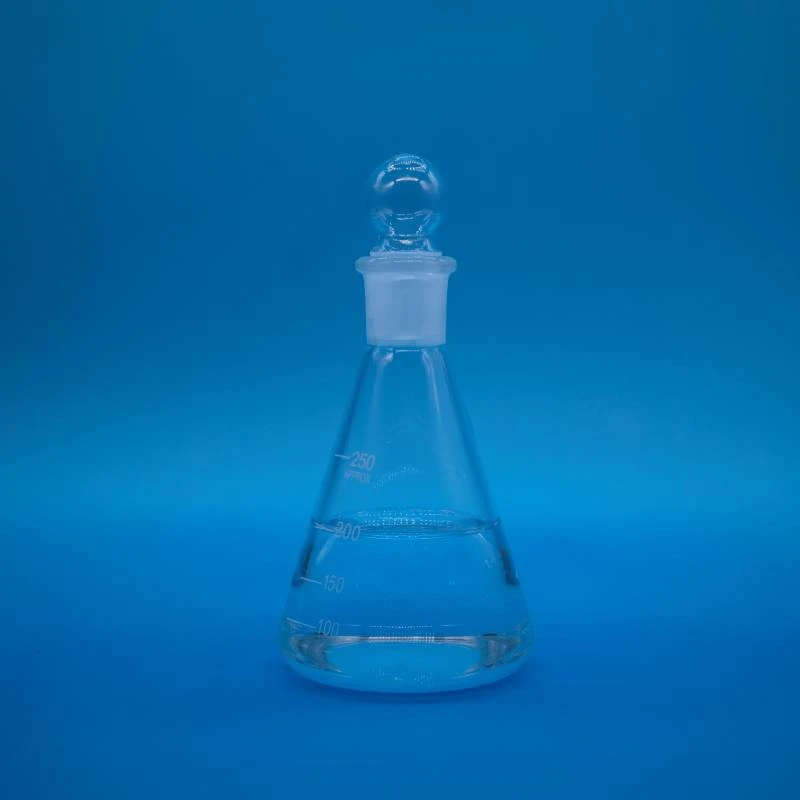
Shandong Peak-tech New Material Co., Ltd. is one of the most reliable manufacturers and suppliers of oilfield silica sol in China. With a professional production team, we are able to meet the needs of the majority of our customers. Welcome to buy durable oilfield silica sol for sale here from our factory.
Oilfield Silica Sol for Laboratory and Field Trials
Peak-tech oilfield silica sol is an aqueous dispersion of amorphous nano silica for evaluation in well-cementing, formation-conformance, sand-consolidation, drilling and completion-fluid, and high-temperature inorganic systems. Candidate grades are screened by particle size, solids content, pH, stabilizing chemistry and brine compatibility.
| Grade Direction | SiO₂ Content | Particle Size | Evaluation Focus | Typical Trial Area |
|---|---|---|---|---|
| Fine-Particle Grade | 20–40 wt%* | 3–20 nm | Transport and surface interaction | Low-permeability and fine-pore studies |
| General Oilfield Grade | 20–40 wt%* | 20–100 nm | Gel control and inorganic binding | Cementing and conformance formulations |
| Large-Particle Grade | 20–40 wt%* | 100–180 nm | Packing and thermal network | High-temperature and larger-pore systems |
*The displayed values are a wider Peak-tech product-family envelope, not simultaneous specifications for one oilfield grade. Final selection requires testing with the actual brine, additives, temperature, pressure, shear and target formation material.
Match Colloidal Stability to Downhole Conditions
Evaluate Salinity and Divalent Ions
Total dissolved solids, calcium, magnesium, iron, pH and mixing water can accelerate aggregation or gelation and must be reproduced in laboratory testing.
Control Gel Time at BHCT and BHST
Temperature changes reaction rate, viscosity and gel development. Test both circulating and static temperature profiles with the complete formulation.
Screen Every Co-Ingredient
Dispersants, polymers, retarders, accelerators, surfactants, cement, weighting agents and corrosion-control chemicals can alter colloidal stability.
Verify Pumpability and Set Behavior
Confirm mixing sequence, shear, pumping time, filtration, injectivity, gel time and final strength or permeability under representative conditions.
Data Needed for Oilfield Grade Screening
- Application: identify primary cementing, remedial cementing, conformance control, water shutoff, sand consolidation, drilling or completion fluids.
- Well conditions: provide BHCT, BHST, pressure, depth, formation type, permeability, pore size and expected contact time.
- Fluid chemistry: submit brine composition, TDS, hardness, pH, oil or gas contact and representative water samples when possible.
- Formulation: list cement, polymers, salts, surfactants, retarders, accelerators, crosslinkers and all other additives with dosages.
- Target specification: state SiO₂ content, particle size, pH, viscosity, density, stabilizer and impurity requirements.
- Performance criteria: define gel time, injectivity, fluid loss, rheology, compressive strength, permeability reduction or sand strength.
- Commercial scope: include laboratory quantity, field-trial volume, forecast demand, packaging and destination country.
Request an Oilfield Silica Sol Trial Grade
Send the application, well conditions, brine analysis, complete additive package, target performance, test protocol and trial quantity for technical screening.
Request an Oilfield Trial GradeTest Before Field Deployment
Laboratory Compatibility
Measure stability, viscosity and gel time after the actual mixing sequence using representative fluids, additives, shear and temperatures.
Performance Validation
Use application-relevant tests for pumpability, injectivity, fluid loss, set strength, permeability change, thermal aging and return permeability.
Packaging Options
Packaging may include 25 kg drums, 200/250 kg plastic drums and 1000 kg IBCs, subject to the selected grade and order plan.
Storage Control
Keep containers sealed and protect silica sol from freezing, contamination and prolonged direct sunlight. Follow grade-specific instructions.
Oilfield Silica Sol Questions
What is oilfield silica sol used for?
It can be evaluated as an inorganic nano-silica component in cementing, conformance, sand-consolidation, drilling, completion and high-temperature formulations.
Is silica sol stable in high-salinity brine?
Stability depends on the grade, total salinity, divalent ions, pH, temperature and additives. Test with the actual brine rather than assuming freshwater behavior.
Can gel time be customized?
Gel behavior can be screened through grade selection and formulation design, but the final window must be established experimentally at representative temperature, salinity and shear.
Does one silica sol work for every well?
No. Well temperature, brine, formation mineralogy, pore structure, additives, placement method and performance target determine the suitable system.
What should be tested before a field trial?
Test compatibility, rheology, gel time, pumpability or injectivity, fluid loss, aging and the relevant final strength or permeability response under representative conditions.
Hot Tags: oilfield silica sol, China oilfield silica sol manufacturers, suppliers, factory
Oilfield Silica Sol Trial Areas
Each application requires laboratory qualification with representative brine, additives, formation material, temperature, pressure and placement conditions.
Well Cementing
Evaluate rheology, fluid loss, thickening time, sedimentation, compressive strength and thermal stability in cement slurries.
Conformance Control
Screen controllable gel development, injectivity and permeability reduction for water-shutoff or profile-modification studies.
Sand Consolidation
Assess penetration, gel or bond formation, retained permeability and consolidated strength with representative formation sand.
Drilling Fluids
Study colloidal stability, filtration, rheology and compatibility with salts, polymers, weighting materials and contamination.
Completion Fluids
Evaluate brine compatibility, particle behavior, filtration and return permeability under the proposed completion conditions.
High-Temperature Systems
Screen inorganic binding and thermal aging in formulations intended for geothermal or high-temperature oilfield service.


