

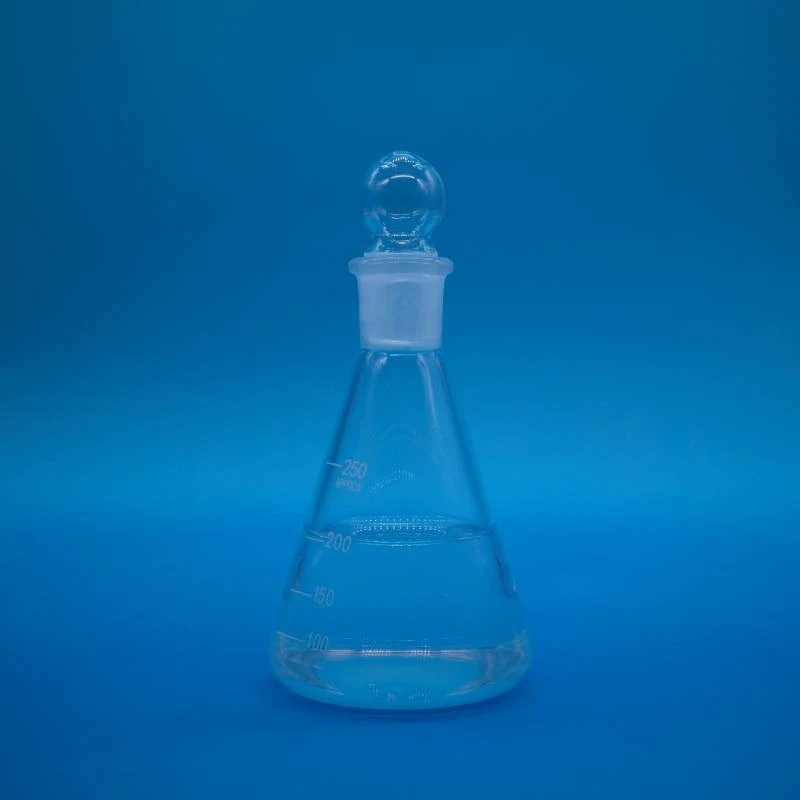
Shandong Peak-tech New Material Co., Ltd. is one of the most reliable manufacturers and suppliers of water treatment colloidal silica in China. With a professional production team, we are able to meet the needs of the majority of our customers. Welcome to buy durable water treatment colloidal silica for sale here from our factory.
Water Treatment Colloidal Silica for Formulation and Media Development
Water treatment colloidal silica is an aqueous dispersion of amorphous nano-SiO₂ considered for engineered flocculation systems, filtration-media binders, adsorbent supports and membrane or surface-treatment formulations. Performance depends on the complete chemistry and must be established through bench testing with the actual water stream.
Parameters to Define Before Evaluation
| Parameter | Peak-tech Reference Range | Water-Treatment Relevance | Confirm for Trial |
|---|---|---|---|
| SiO₂ Content | 20–40 wt% | Active silica dose and water load | Target solids and tolerance |
| Particle Size | 3–180 nm | Surface area, adsorption and interaction behavior | Mean size, distribution and method |
| pH | 2.0–6.0 for referenced acidic platform | Charge, stability and compatibility | Operating pH and adjustment sequence |
| Viscosity | <10 mPa·s at 20°C* | Pumping, dilution and dosing | Grade and test method |
| Dispersion Medium | Deionized water* | Formulation and ionic compatibility | Process-water chemistry |
| Packaging | 25 kg / 200 kg / 1000 kg IBC | Lab, pilot and production supply | Consumption and storage plan |
*Reference values come from the acidic colloidal silica datasheet and are not universal specifications. A feasible grade combines its own particle size, solids, pH, stabilizer and purity limits.
How Colloidal Silica May Function in Treatment Systems
Designed Flocculation Systems
Silica nanoparticles may interact with compatible cationic polymers or inorganic species. Dose, order of addition, ionic strength and shear must be optimized by jar testing.
Filtration and Adsorbent Media
After controlled drying or curing, silica particles can help bind compatible mineral or porous media without relying only on organic binders.
Membrane and Support Modification
Selected grades can be evaluated as formulation components for hydrophilic or silica-containing surface layers, subject to compatibility and fouling tests.
Supported Treatment Materials
The high-area silica phase may provide a support for compatible active ingredients in purpose-designed adsorption or catalytic treatment media.
Recommended Evaluation Steps
- Characterize the water: report pH, conductivity, hardness, alkalinity, turbidity, suspended solids, dissolved organics and target contaminants.
- Define the role: specify whether colloidal silica is being assessed as a formulation component, media binder, surface modifier or carrier.
- Screen compatibility: test contact with polymers, coagulants, salts, acids, alkalis, media and construction materials.
- Run bench tests: optimize dose, dilution, addition order, mixing intensity, residence time and separation conditions.
- Measure the outcome: compare turbidity, settling, filtration rate, pressure drop, treated-water silica and residual chemistry.
- Complete compliance review: drinking-water or regulated uses require application-specific approvals and customer validation.
Request a Water Treatment Colloidal Silica Trial Grade
Send the water analysis, treatment objective, proposed function, process pH, companion chemicals, dosing method, compliance requirements and trial quantity.
Request a Trial Grade RecommendationExplore Colloidal Silica by Chemistry and Property
Water Treatment Colloidal Silica Questions
Is colloidal silica a standard water-treatment coagulant?
No. It should be treated as a specialty component for a designed system. Conventional aluminum- or iron-based coagulants and polymeric flocculants serve different roles.
Can colloidal silica remove silica from water?
No. Adding colloidal silica introduces silica nanoparticles. Removing dissolved or colloidal silica from feedwater requires a separate treatment strategy based on the water analysis.
Why is jar testing required?
Particle interactions depend on pH, ionic strength, hardness, polymers, coagulants, contaminants, dose, addition order and mixing conditions. Actual-water testing is therefore essential.
Which colloidal silica grade should be tested?
Selection should consider particle size, solids content, pH, stabilizer, sodium level, purity, viscosity and compatibility with the complete treatment formulation.
Can it be used in drinking-water treatment?
Only after confirming the exact grade, local regulatory requirements, required certifications, maximum dose and complete process validation. Industrial-grade supply should not be assumed compliant.
Hot Tags: water treatment colloidal silica, China water treatment colloidal silica manufacturers, suppliers, factory
Potential Water Treatment Application Directions
These are development directions rather than universal performance claims. Every system requires compatibility screening, bench testing and regulatory review before use.
Flocculation-System Trials
Evaluate silica nanoparticles with compatible polymers or inorganic chemistry through controlled jar testing.
Filter-Media Binding
Assess colloidal silica as an inorganic binder for compatible mineral, ceramic or porous filtration media.
Membrane Modification
Screen selected dispersions in hydrophilic or silica-containing coating formulations for engineered membranes.
Adsorbent Supports
Use the silica phase as a potential binder or support in purpose-designed adsorption media.
Catalytic Media
Evaluate high-area silica as a carrier component for compatible active treatment materials.
Custom Formulations
Develop particle size, pH, solids and purity around the actual industrial-water chemistry and separation process.


