


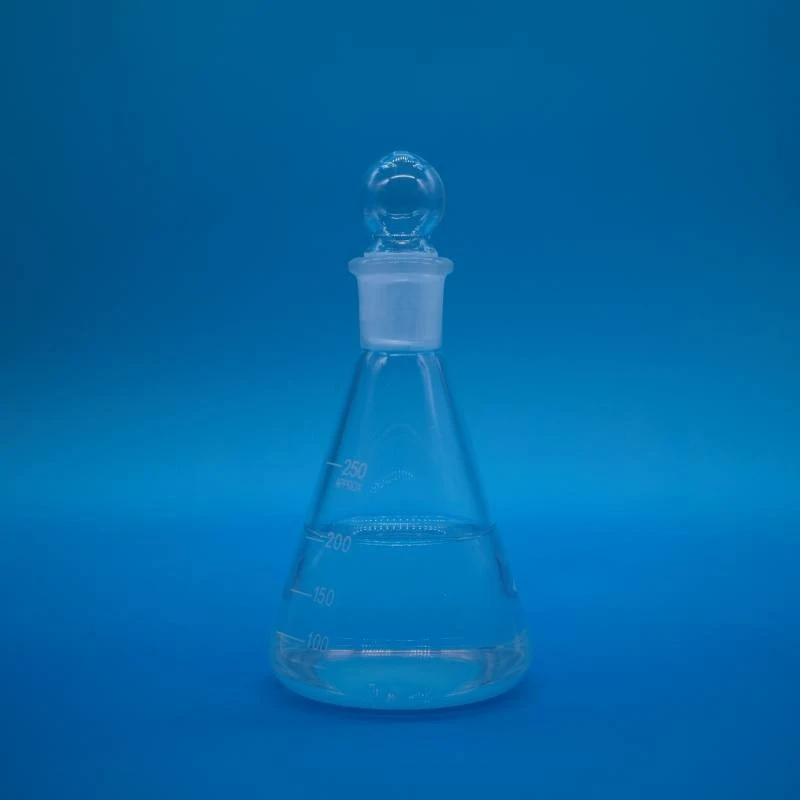
Shandong Peak-tech New Material Co., Ltd. is one of the most reliable manufacturers and suppliers of colloidal silica particle in China. With a professional production team, we are able to meet the needs of the majority of our customers. Welcome to buy durable colloidal silica particle for sale here from our factory.
Colloidal Silica Particles for Controlled Industrial Performance
Colloidal silica particles are discrete, amorphous SiO₂ nanoparticles stably dispersed in water. Particle size and distribution influence surface area, reactivity, packing, pore formation, polishing behavior and the development of inorganic strength after drying.
How Colloidal Silica Particle Size Changes Performance
| Particle Range | Typical Behavior | Common Selection Direction | Control Reference |
|---|---|---|---|
| 3–20 nm | High specific surface area and strong surface activity | Catalyst supports, electronic CMP and high-performance coatings | Small particles: ±1 nm* |
| 20–100 nm | Balanced flow, packing and inorganic binding behavior | General industrial processing, paper coating and textile sizing | Application-specific target |
| 100–180 nm | Higher packing density and network permeability | Investment casting, refractories and hard coatings | Large particles: ±5 nm* |
*Particle-growth accuracy is based on the referenced acidic colloidal silica technical specification. Confirm the measurement method, target mean size and distribution for the selected grade.
Particle Size Is Important-but Not the Only Specification
Smaller Particles
Smaller particles generally provide more surface area per unit mass, increasing interaction with binders, substrates, catalysts and polishing surfaces.
Larger Particles
Larger particles can support packing, permeability and lower surface demand in selected ceramic, refractory and coating systems.
Narrow or Designed PSD
Particle-size distribution affects repeatability, pore structure, surface finish and rheology. Mean size alone does not fully describe performance.
pH and Stabilization
Particle size must be matched with pH, stabilizer, sodium level, solids content and formulation compatibility to maintain dispersion stability.
Colloidal Silica Particle Family Parameters
| Parameter | Referenced Family Range | Buyer Confirmation |
|---|---|---|
| Particle Morphology | Discrete nano spheres | Spherical or modified morphology |
| Particle Size | 3–180 nm | Target mean size and distribution |
| SiO₂ Content | 20–40 wt% | Nominal solids and tolerance |
| pH | 2.0–6.0 for referenced acidic platform | Acidic, neutral or alkaline system |
| Appearance | Milky translucent liquid | Grade-specific acceptance standard |
| Packaging | 25 kg, 200 kg or 1000 kg IBC | Trial and production requirement |
Information Needed to Match a Particle Grade
- Application and required function: binding, polishing, coating, pore control, surface modification or catalyst support.
- Target particle size: include the measurement method and acceptable distribution where available.
- System chemistry: specify pH, stabilizing ion, electrolyte exposure and incompatible ingredients.
- Solids and rheology: define SiO₂ concentration, viscosity limits, dosing method and dilution plan.
- Purity: provide sodium, metal-ion or other trace-element limits for sensitive applications.
- Process conditions: include temperature, mixing order, drying or firing cycle, substrate and performance target.
Request a Colloidal Silica Particle Recommendation
Share your target particle size, distribution, SiO₂ content, pH, stabilizer, purity limit, application and trial quantity for grade matching.
Request a Particle-Matched GradeExplore Particle and Chemistry Options
Colloidal Silica Particle Questions
What is a colloidal silica particle?
It is a nanoscale particle of amorphous silicon dioxide maintained as a stable dispersion in a liquid medium, normally water.
What particle sizes are available?
The referenced acidic product platform covers 3–180 nm. The available size, solids, pH and purity combination must be confirmed for a specific grade.
Are smaller colloidal silica particles always better?
No. Smaller particles provide higher surface area, while larger particles may better support packing, permeability or lower surface demand. Selection depends on the process objective.
Does particle size affect viscosity?
Yes. Particle size and surface area can influence viscosity, but solids content, pH, stabilizer, electrolyte level and particle distribution also matter.
How should particle size be specified?
Specify the target mean size, acceptable distribution and measurement method, together with solids, pH, stabilizer, purity and end-use performance requirements.
Hot Tags: colloidal silica particle, China colloidal silica particle manufacturers, suppliers, factory
Colloidal Silica Particle Applications
Particle size is selected together with solids, pH, stabilizer and purity. These application directions support initial screening and require formulation trials before production approval.
CMP and Optical Polishing
Controlled fine particles support surface interaction and finish control in compatible polishing formulations.
Catalyst Supports
High surface area can support active-component distribution and silica network formation in catalyst preparation.
Functional Coatings
Selected particles can contribute hardness, adhesion, abrasion resistance and surface modification.
Paper and Textile
Balanced particle behavior supports coating, sizing, surface treatment and process-performance adjustment.
Investment Casting
Particle selection influences slurry behavior, shell strength, permeability and fired ceramic structure.
Refractories and Ceramics
Larger particles can support packing and inorganic network development in compatible heat-resistant systems.


