


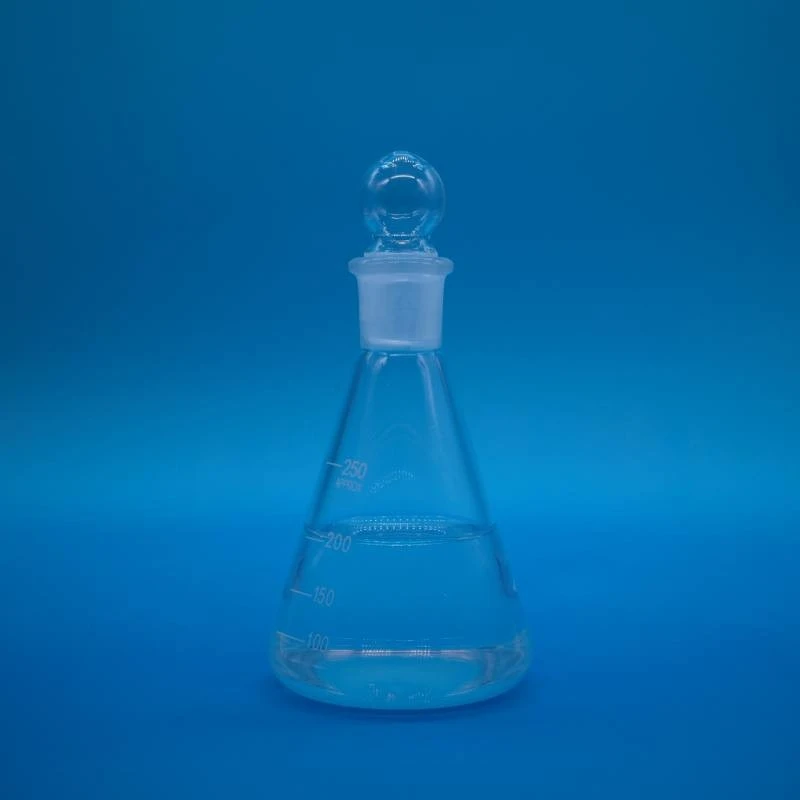
Shandong Peak-tech New Material Co., Ltd. is one of the most reliable manufacturers and suppliers of building materials silica sol in China. With a professional production team, we are able to meet the needs of the majority of our customers. Welcome to buy durable building materials silica sol for sale here from our factory.
Building Materials Silica Sol
Peak-tech building materials silica sol is an aqueous dispersion of amorphous nano silica for evaluation in cementitious systems, concrete surface treatments, inorganic coatings, refractory formulations and prefabricated construction materials. Particle size, solids content, pH and stabilizing chemistry can be screened against the substrate and mix design.
| Grade Direction | SiO₂ Content | Particle Size | Primary Function | Typical Trial Area |
|---|---|---|---|---|
| Fine-Particle Grade | 20–40 wt%* | 3–20 nm | High surface activity | Densifiers and fine coatings |
| General Building Grade | 20–40 wt%* | 20–100 nm | Binding and reinforcement | Cement mixes and inorganic coatings |
| Large-Particle Grade | 20–40 wt%* | 100–180 nm | Packing and thermal network | Refractory and hard-coating systems |
*These values describe the wider Peak-tech silica-sol family and are not simultaneous specifications for one building-material grade. The achievable combination depends on concentration, particle size, pH, stabilizer and modification chemistry.
Functions in Construction Formulations
Support Dense Surface Structures
Nanoscale silica can interact with compatible mineral systems and fill fine pore spaces. Performance depends on substrate chemistry, moisture and application conditions.
Form Si–O–Si Networks
During drying or curing, colloidal particles can form an inorganic silica network that supports adhesion, cohesion and heat-resistant structures.
Evaluate Hardness and Wear Resistance
Properly formulated treatments may improve surface hardness, dusting resistance and abrasion behavior after sufficient penetration and curing.
Integrate into Suitable Mixes
The liquid form supports dosing and mixing, but compatibility with cement, salts, pigments, polymers and admixtures must be tested.
Information Needed for Grade Recommendation
- Application: identify concrete densifier, cement admixture, inorganic coating, refractory binder, repair mortar or prefabricated material.
- Substrate or mix: provide cement type, aggregate, water-to-binder ratio, supplementary materials, porosity and surface age.
- Target specification: state required SiO₂ content, particle size, pH, density, viscosity and stabilizing system.
- Other ingredients: list salts, pigments, polymers, fibers, accelerators, retarders, water reducers and curing agents.
- Process conditions: include dosage, mixing order, dilution, application method, temperature, humidity, drying and curing schedule.
- Performance criteria: define adhesion, hardness, abrasion, dusting, permeability, strength or thermal targets and test standards.
- Order details: provide sample quantity, pilot demand, annual consumption, packaging and destination country.
Request a Building Materials Silica Sol
Send the substrate or mix design, target function, required parameters, additives, process conditions, test standard and trial quantity for grade screening.
Request a Construction Trial GradeValidate Performance Before Scale-Up
Bench Compatibility
Check gelation, viscosity, setting behavior, air entrainment, sedimentation and interaction with all formulation components.
Substrate Trials
Evaluate penetration, coverage, finish, curing and performance on representative surfaces under actual environmental conditions.
Packaging Options
Packaging may include 25 kg drums, 200/250 kg plastic drums and 1000 kg IBCs, subject to the selected grade.
Storage Conditions
Keep containers sealed and protect silica sol from freezing, contamination and prolonged direct sunlight. Follow grade-specific instructions.
Building Materials Silica Sol Questions
What is building materials silica sol?
It is an aqueous colloidal dispersion of amorphous silica evaluated as an inorganic binder, surface modifier, pore-filling component or formulation additive in construction materials.
Can silica sol be used as a concrete densifier?
Selected grades can be evaluated in densifier formulations. Results depend on substrate porosity, surface preparation, application rate, penetration, curing and any co-formulants.
Is silica sol compatible with every cement admixture?
No. High ionic strength, pH changes, polymers and certain salts can destabilize colloidal silica. Test the full mix and actual addition sequence.
Does silica sol guarantee a fixed strength increase?
No. Strength and durability outcomes depend on formulation, dosage, raw materials, curing and test conditions. Establish performance through comparative trials.
How should building materials silica sol be stored?
Store it in sealed containers, prevent freezing, avoid contamination and prolonged direct sunlight, and follow the storage range specified for the selected grade.
Hot Tags: building materials silica sol, China building materials silica sol manufacturers, suppliers, factory
Silica Sol for Building Material Systems
Select the grade and dosage through comparative testing with the actual raw materials, substrate, application equipment and curing conditions.
Concrete Densifiers
Evaluate penetration, mineral interaction, surface hardness, dusting resistance and finish on representative concrete slabs.
Cementitious Materials
Screen compatibility, rheology, setting, shrinkage, strength development and durability in mortars, grouts and cement-based mixes.
Inorganic Coatings
Use as a candidate binder or modifier where adhesion, hardness, mineral compatibility and weathering behavior are evaluated.
Refractory Materials
Assess green strength, drying, thermal bonding, permeability and high-temperature performance in refractory formulations.
Repair and Prefabrication
Evaluate in compatible repair mortars, precast products and mineral components requiring controlled binding or surface modification.
Architectural Surface Treatments
Test on stone, masonry or mineral surfaces for penetration, appearance, adhesion and resistance under intended service conditions.


