


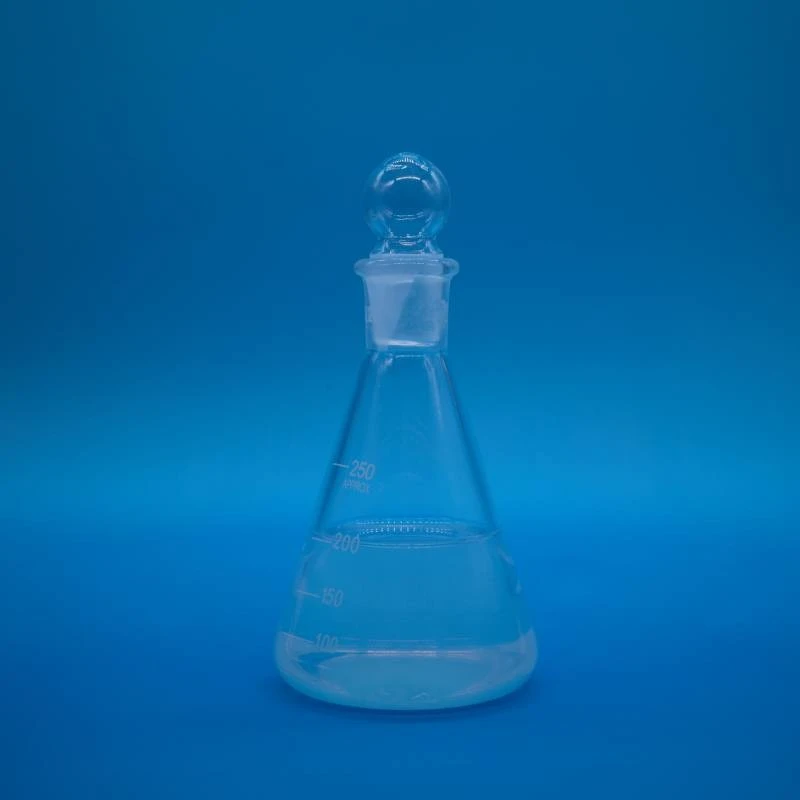
Shandong Peak-tech New Material Co., Ltd. is one of the most reliable manufacturers and suppliers of refractory binder silica sol in China. With a professional production team, we are able to meet the needs of the majority of our customers. Welcome to buy durable refractory binder silica sol for sale here from our factory.
Refractory Binder Silica Sol Grade Comparison
| Model | Binder Positioning | Particle Size | SiO₂ Content | Na₂O Content | pH | Shelf Life |
|---|---|---|---|---|---|---|
| HC4010 | Fine-particle trial | 10–15 nm | 40±1% | ≤0.4% | 9.5–10.5 | ≥12 months |
| HC4020 | Larger-particle trial | 20–30 nm | 40±1% | ≤0.4% | 9.5–10.5 | ≥12 months |
| HC5020 | Higher-solids trial | 20–30 nm | 50±1% | ≤0.4% | 9.5–10.5 | ≥12 months |
These grades are starting points for formulation trials. Final approval must be based on the complete refractory composition, installation process, curing schedule and service conditions.
Choose the Grade Around the Refractory Process
A silica-sol binder cannot be selected by solids content alone. Particle size, water balance, raw-material compatibility and the required setting profile should be evaluated together.
Finer Particle Option
Combines 40±1% SiO₂ with 10–15 nm particles for trials where a finer silica population is required.
Larger Particle Option
Provides the same 40±1% solids level with 20–30 nm particles for comparative rheology and packing trials.
Higher-Solids Option
Offers 50±1% SiO₂ with 20–30 nm particles when reducing binder-added liquid is a formulation objective.
Validate the Full Mix
Confirm mixing, flow, setting, drying, green strength, fired strength, shrinkage and thermal performance before production use.
What Buyers Should Confirm Before Ordering
- Refractory chemistry: identify aggregates, fine powders, additives, cement content and target mineral system.
- Installation method: specify casting, pumping, gunning, ramming, coating, molding or repair application.
- Binder dosage: provide the present addition rate, total liquid balance and any accelerator or setting agent.
- Processing targets: define mixing sequence, flow retention, working time, demolding time and drying schedule.
- Performance criteria: state green strength, fired strength, shrinkage, permeability, thermal cycling and service temperature requirements.
- Commercial details: include trial quantity, annual demand, packaging preference and destination country.
Request a Refractory Binder Grade
Share your refractory composition, installation method, binder dosage, curing schedule, service temperature and trial quantity so our team can review the suitable silica-sol starting grade.
Request a Binder RecommendationPackaging and Storage Conditions
Packaging
Polyethylene packaging options include 25 kg, 250 kg and 1000 kg.
Temperature
Store at 0–40°C and prevent freezing. Exposure below 0°C can cause irreversible gelation.
Sunlight
Avoid prolonged direct sunlight during storage and transportation.
Container Control
Keep containers closed to limit water evaporation and precipitation of solid silica particles.
Refractory Binder Silica Sol FAQ
Which silica-sol grades can be considered for refractory binder trials?
HC4010, HC4020 and HC5020 are representative high-solids candidates. The final grade should be qualified in the customer's complete refractory formulation.
What is the difference between HC4010 and HC4020?
Both contain 40±1% SiO₂. HC4010 has a listed particle size of 10–15 nm, while HC4020 is 20–30 nm.
When should HC5020 be evaluated?
HC5020 can be evaluated when a 50±1% silica-sol grade is needed, particularly where the formulation aims to reduce liquid introduced with the binder.
What tests are needed before production use?
Recommended checks include mixing behavior, flow retention, setting, drying, green and fired strength, shrinkage, permeability and thermal cycling.
How should refractory binder silica sol be stored?
Store it at 0–40°C, prevent freezing and prolonged sunlight, and keep the package closed when not in use.
Hot Tags: refractory binder silica sol, China refractory binder silica sol manufacturers, suppliers, factory
Applications of Refractory Binder Silica Sol
Silica sol can be evaluated as an aqueous inorganic binder in compatible refractory systems. Each application requires formulation trials using the actual aggregates, additives, installation process and thermal conditions.
Refractory Castables
Binder grades can be screened for flow, working time, setting, drying and mechanical performance in compatible castable formulations.
Pumpable Refractory Mixes
Suitable grades may be evaluated for pumping stability, flow retention, installed density and strength development.
Gunning Materials
Trials can assess delivery behavior, rebound, adhesion, setting control and the properties of the installed lining.
Precast Refractory Shapes
Silica-sol binders can be tested where molding consistency, demolding, controlled drying and fired performance are important.
Refractory Coatings
Compatible formulations can be evaluated for suspension, application behavior, adhesion, drying and heat resistance.
High-Temperature Repair Mixes
Binder candidates may be qualified for placement, bonding, drying shrinkage and thermal cycling in repair applications.


