


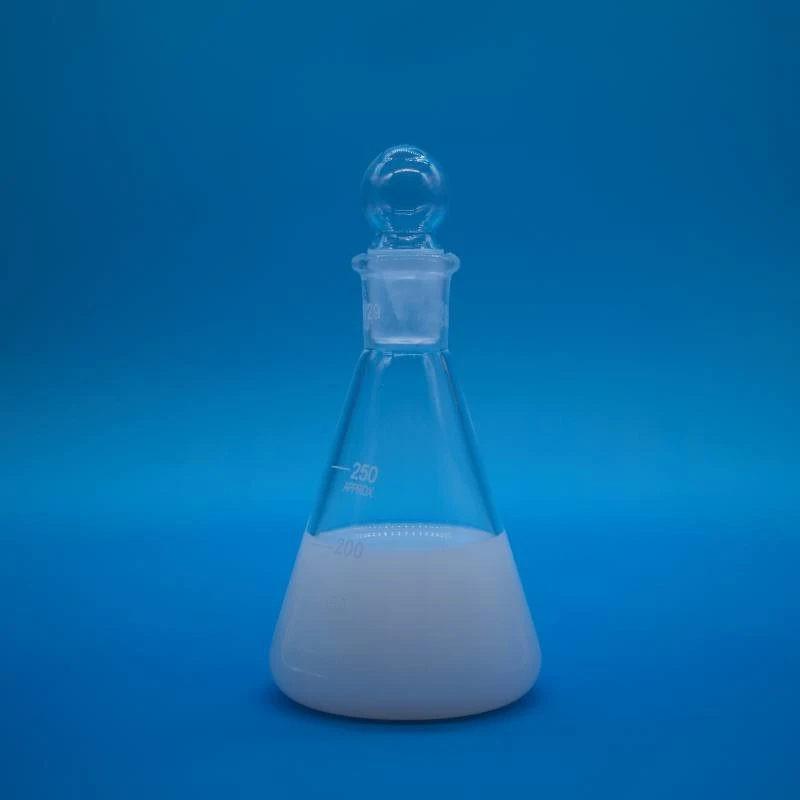
Shandong Peak-tech New Material Co., Ltd. is one of the most reliable manufacturers and suppliers of colloidal silica for catalyst support in China. With a professional production team, we are able to meet the needs of the majority of our customers. Welcome to buy durable colloidal silica for catalyst support for sale here from our factory.
Colloidal Silica for Catalyst Support Grade Comparison
| Model | SiO₂ Content | Na₂O Content | Particle Size | pH | Shelf Life |
|---|---|---|---|---|---|
| CS3010A | 30±1% | ≤0.01% | 10–20 nm | 8–10 | ≥12 months |
| CS3010B | 30±1% | ≤0.05% | 10–20 nm | 8–10 | ≥12 months |
| CS3010C | 30±1% | ≤0.1% | 10–20 nm | 8–10 | ≥12 months |
Particle size, specific surface area, pH and SiO₂ content can be customized. Confirm the target values, test methods and final tolerances before sampling.
Control Sodium Before Support Qualification
Lowest-Sodium Direction
CS3010A provides the tightest published Na₂O limit for support processes sensitive to sodium contribution.
Intermediate Sodium Control
CS3010B retains the standard physical profile with a published Na₂O limit of ≤0.05%.
Standard Sodium-Control Option
CS3010C is the standard direction where a Na₂O limit of ≤0.1% meets the support specification.
Support Structure Targets
Particle size, specific surface area, pH and SiO₂ content can be reviewed for forming, pore and calcination targets.
Information Needed for Catalyst Support Evaluation
Provide the support composition, forming route, pore targets and thermal process before selecting a CS grade.
- Support composition: identify alumina, zeolite, titania or other carrier components and permitted impurities.
- Forming process: specify extrusion, pelletizing, coating, granulation or another preparation route.
- Structure targets: provide specific surface area, pore volume, pore-size distribution and mechanical-strength requirements.
- Thermal process: provide drying, calcination, activation and service-temperature conditions.
- Quality requirements: include sampling rules, certificate requirements and acceptance limits.
- Order details: provide trial quantity, annual demand, packaging and destination country.
Request Colloidal Silica for a Catalyst Support Trial
Send the support composition, forming route, sodium limit, pore targets, calcination conditions and required quantity.
Request a Grade RecommendationProtect Product Stability During Storage
Packaging Options
Available polyethylene packaging sizes are 25 kg, 250 kg and 1000 kg.
Storage Temperature
Store at 0–40°C and protect from freezing. Temperatures below 0°C can cause irreversible gelation.
Direct Sunlight
Avoid prolonged exposure to direct sunlight during storage and transportation.
Container Closure
Keep containers closed to limit water evaporation and precipitation of solid silica particles.
Colloidal Silica for Catalyst Support Questions
Which colloidal silica grades are available for catalyst supports?
The standard grades are CS3010A, CS3010B and CS3010C.
Why are three sodium limits available?
Their principal published difference is the Na₂O limit: ≤0.01%, ≤0.05% or ≤0.1%.
Which catalyst-support parameters can be customized?
Particle size, specific surface area, pH and SiO₂ content are listed as customizable.
What support-process information is needed?
Provide the support composition, forming route, surface-area and pore targets, strength requirements, thermal process and test methods.
How should colloidal silica for catalyst supports be stored?
Store it at 0–40°C, prevent freezing and direct sunlight, and keep the container closed.
Hot Tags: colloidal silica for catalyst support, China colloidal silica for catalyst support manufacturers, suppliers, factory
Applications of Colloidal Silica for Catalyst Support
CS grades can be evaluated as silica sources or inorganic binders during catalyst-support preparation. Qualification should connect sodium, particle size and surface area with the actual forming and thermal process.
Extruded Catalyst Supports
Evaluated as an inorganic binder during compatible extrusion and shaping processes.
Pellet and Granule Supports
Used as a controlled silica source or binder where particle size, sodium and mechanical strength are specified.
Molecular Sieve Formulations
Can be assessed in compatible formulations requiring low-sodium silica and adjustable physical parameters.
Washcoat and Emission Supports
Suitable for carrier and washcoat development trials after compatibility and thermal processing are verified.
Petrochemical Catalyst Supports
Evaluated in catalyst preparation where silica purity and specific surface area require defined control.
Custom Catalyst Support Development
Supports projects requiring customized particle size, surface area, pH or SiO₂ content.


